
Ashwagandha Benefits: What Science Says About This Ancient Herb (April 2026)
Scientific evidence on ashwagandha benefits: 27.9% cortisol reduction, 17% testosterone increase, sleep and strength improvements backed by RCTs. April 2026.

You're scrolling through ashwagandha reddit threads trying to figure out if 300mg or 600mg is the right dose, and whether splitting it morning and night makes a difference. The actual answer is in the trial design, not the anecdotes. The stress studies used 300mg KSM-66 twice daily and measured a 27.9% cortisol drop over 60 days. The testosterone studies in resistance-trained men used 600mg daily and showed a 17% increase. We went through every major RCT to extract the dosage protocols that produced measurable outcomes, the mechanisms that explain them, and the populations where the evidence is strongest.
TLDR:
- Ashwagandha reduces cortisol by 27.9% at 300mg twice daily in controlled trials
- You'll see measurable gains in VO2max (4.09 ml/min/kg) and strength over 8-12 weeks
- Sleep quality improves through cortisol suppression, with studies showing faster onset
- Testosterone rises 17% in stressed men; perimenopausal women report fewer hot flashes
- Avoid during pregnancy, with thyroid disorders, or on immunosuppressants due to safety gaps
How Ashwagandha Reduces Stress and Anxiety
Ashwagandha's stress-reducing effects come down to one primary mechanism: cortisol suppression. A placebo-controlled RCT found 300mg of KSM-66 ashwagandha twice daily reduced serum cortisol by 27.9% over 60 days. Participants also reported a 44% drop in perceived stress scores.
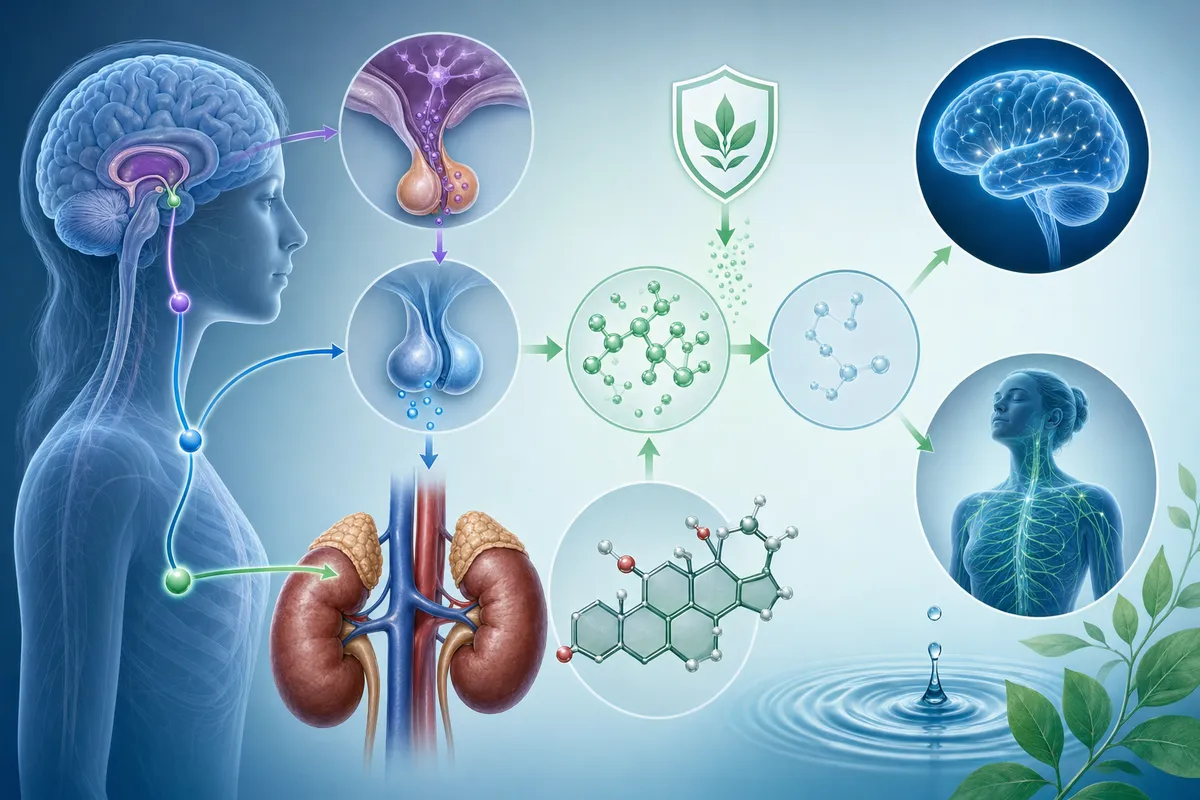
The herb works as an adaptogen, meaning it helps the body modulate its stress response instead of simply sedating it. This distinction matters: users stay alert while feeling less reactive to stressors.
Anxiety Outcomes in Clinical Trials
A 2019 dose-response study across 240mg and 480mg daily doses found anxiety scores dropped measurably at both levels, with the higher dose producing stronger results over 8 weeks.
Reddit users frequently echo these findings, with ashwagandha anxiety threads consistently ranking it among the most effective supplements for stress without sedation.
Ashwagandha for Sleep Quality and Duration
Sleep research on ashwagandha is more convincing than most people expect. A randomized controlled trial in adults with insomnia found that 300 mg of KSM-66 taken twice daily for 10 weeks improved sleep quality, sleep onset latency, and total sleep time compared to placebo. Participants also reported better mental alertness upon waking.
The leading mechanism involves withanolides lowering cortisol, which in turn reduces the physiological arousal that delays sleep onset. Less cortisol at night means the body can transition into sleep-promoting states more readily.
One well-designed trial is not a settled case, but the effect sizes reported were meaningful, and the cortisol pathway gives the finding biological plausibility worth taking seriously.
Effects on Athletic Performance and Muscle Strength

The evidence here is worth paying attention to if you train. A meta-analysis of randomized controlled trials found ashwagandha supplementation raised VO2max by 4.09 ml/min/kg, a concrete aerobic capacity gain that holds across both athletic and non-athletic populations.
Resistance training studies tell a consistent story. At doses ranging from 300mg to 600mg daily over 8 to 12 weeks, trials report gains in upper and lower body strength alongside reduced exercise-induced muscle damage markers. Recovery speed appears to improve with regular use, along with peak output.
For athletes, the combination of direct strength outcomes and faster recovery makes ashwagandha one of the better-supported non-hormonal training supplements in the current literature. The dosage range used across performance studies is narrow and replicable, which matters when you're trying to match what actually worked in the research.
Ashwagandha and Testosterone in Men
The testosterone research is real, but context shapes the finding. A 2015 RCT in resistance-trained men found 600mg daily of KSM-66 raised testosterone by roughly 17% over 8 weeks, with DHEA-S levels rising alongside it.
Effects appear most pronounced in men under chronic stress or facing fertility concerns. Studies in infertile men show testosterone improvements paired with better sperm parameters, suggesting the mechanism runs partly through cortisol suppression instead of direct androgenic action. Healthy men with normal testosterone at baseline see smaller, less consistent gains.
Benefits for Women: Hormones, Fertility, and Menopause
For women, ashwagandha's hormonal effects work through the HPA axis instead of direct estrogen or progesterone pathways. It reduces the cortisol load that disrupts hormonal balance in the first place.
The clearest evidence targets perimenopause. One randomized controlled trial in perimenopausal women found ashwagandha supplementation reduced hot flash frequency and severity, improved quality of life scores, and lowered anxiety versus placebo over 8 weeks. Some participants also reported improvements in menstrual regularity.
Fertility applications in otherwise healthy women remain underresearched. Studies hint at benefit for women with hormonal irregularities, but controlled trials with hard fertility endpoints are scarce. Promising mechanism, insufficient data to make confident claims beyond the perimenopausal population.
Recommended Dosage and How to Take Ashwagandha
Most clinical trials use between 300 to 600 mg of ashwagandha root extract daily, typically as a standardized KSM-66 or Sensoril extract. Some stress and sleep protocols push to 600 mg taken at night, while testosterone-focused regimens often split doses across morning and evening.
For women, one trial used 300 mg twice daily to improve sexual function and hormonal balance. General wellness goals tend to land in the 300 to 500 mg range.
Powder vs. Capsule
Ashwagandha powder can be mixed into warm milk or smoothies, but the bitter taste is a real barrier for consistent use. Capsules offer standardized dosing and better compliance for most people. If using powder, 1/4 to 1/2 teaspoon daily is a common starting point.
Consistency matters more than timing. Take it with food to reduce any gastrointestinal sensitivity.
| Primary Goal | Daily Dose | Timing | Trial Duration | Key Outcome |
|---|---|---|---|---|
| Stress and cortisol reduction | 300mg twice daily (600mg total) | Morning and evening | 60 days | 27.9% cortisol reduction, 44% drop in perceived stress scores |
| Anxiety reduction | 240-480mg daily | Single or split dose | 8 weeks | Measurable anxiety score reduction at both doses, stronger at 480mg |
| Testosterone increase in men | 600mg daily | Single dose or split | 8 weeks | 17% testosterone increase in resistance-trained men, stronger effects in stressed or infertile men |
| Athletic performance and strength | 300-600mg daily | Single dose or split | 8-12 weeks | 4.09 ml/min/kg VO2max increase, improved upper and lower body strength, faster recovery |
| Sleep quality improvement | 300mg twice daily (600mg total) | Morning and evening, or single evening dose | 10 weeks | Improved sleep onset latency, total sleep time, and morning alertness in adults with insomnia |
| Perimenopausal symptoms | 300mg twice daily (600mg total) | Morning and evening | 8 weeks | Reduced hot flash frequency and severity, improved quality of life scores, lower anxiety |
Side Effects and Who Should Avoid Ashwagandha
Ashwagandha has a reasonable short-term safety record. Trials up to 3 months consistently report mild GI symptoms as the most common complaint: nausea, loose stools, and stomach discomfort. These are typically dose-dependent and often resolve with food.
The more serious concern is liver toxicity. A small number of case reports have linked ashwagandha to hepatotoxicity, primarily with high-dose or non-standardized preparations. These cases are rare, but real enough that anyone with existing liver disease should avoid it.
Who Should Avoid Ashwagandha
- Pregnant women: animal studies show potential abortifacient effects and human safety data is absent
- People with thyroid disorders: ashwagandha can raise T3 and T4 levels, which may be problematic with hyperthyroidism or thyroid medication
- Anyone on immunosuppressants: ashwagandha stimulates immune activity, directly opposing immunosuppressant mechanisms
- People with autoimmune conditions such as lupus, MS, or rheumatoid arthritis for the same reason
Long-term use beyond 3 months lacks adequate safety data in humans, which warrants caution for anyone considering indefinite daily use.
Ashwagandha During Pregnancy: What the Evidence Shows
Most traditional herbalists recommended ashwagandha during pregnancy, but current clinical evidence tells a different story.
Animal studies have raised concerns about uterine contractility at high doses, and no adequate human safety trials exist. The Ayurvedic tradition actually used ashwagandha in specific preparations to support pregnancy, yet those protocols involved supervised dosing far removed from modern supplement use.
What We Know About the Risks
The honest answer is that we don't know enough. There are no randomized controlled trials in pregnant women, and case reports are too sparse to draw firm conclusions. Several users on Reddit have shared stories of taking ashwagandha while pregnant without apparent harm, but anecdote cannot substitute for safety data.
Until controlled human trials exist, most OB-GYNs advise avoiding ashwagandha during pregnancy entirely.
Evidence-Based Biohacking with Ashwagandha
Ashwagandha works best when treated as a variable, not a habit. Before starting, pull baseline labs: serum cortisol, thyroid panel if relevant, and total testosterone if that's the target outcome. Log HRV trends and sleep data from a wearable for at least two weeks before the first dose.
Run the intervention for 8 to 12 weeks, matching what the trials actually used. After that window, retest the same markers. If cortisol dropped, HRV improved, or sleep scores shifted, you have a real signal. If nothing moved, you have a clear answer.
Subjective impressions mislead. Objective data doesn't.
Final Thoughts on Ashwagandha Supplementation
Before adding ashwagandha to your regimen, understand that the research shows real effects but individual response varies widely. Pull baseline cortisol and track HRV for two weeks before starting. Match the trial protocols at 300 to 600mg daily for 8 to 12 weeks, then retest to see if your biomarkers moved.
FAQ
What's the best dosage of ashwagandha for stress vs testosterone?
For stress and anxiety, most trials used 300mg twice daily of standardized extract like KSM-66, which reduced cortisol by 27.9% in one controlled study. For testosterone in men, the effective dose was 600mg daily, which raised levels by roughly 17% over 8 weeks in resistance-trained men.
Can I take ashwagandha if I have thyroid issues?
No, you should avoid it. Ashwagandha can raise T3 and T4 levels, which creates problems if you have hyperthyroidism or take thyroid medication, as it works against your treatment or worsens an overactive thyroid.
How long does it take to see results from ashwagandha?
Most clinical trials show measurable changes in 8 to 12 weeks for outcomes like cortisol reduction, sleep quality, strength gains, and testosterone increases. Pull baseline bloodwork before starting and retest after this window to confirm whether it worked for you.
Ashwagandha powder vs capsules for daily use?
Capsules offer standardized dosing and better compliance since ashwagandha powder tastes bitter and dosing is less precise. If you use powder, start with 1/4 to 1/2 teaspoon daily, but most people stick with capsules for consistent results.
Is ashwagandha safe during pregnancy?
No reliable human safety data exists, and animal studies show potential uterine contractility issues at high doses. Most OB-GYNs advise avoiding ashwagandha entirely during pregnancy until controlled human trials confirm safety.
Frequently asked questions
- 01 What's the best dosage of ashwagandha for stress vs testosterone?
- For stress and anxiety, most trials used 300mg twice daily of standardized extract like KSM-66, which reduced cortisol by 27.9% in one controlled study. For testosterone in men, the effective dose was 600mg daily, which raised levels by roughly 17% over 8 weeks in resistance-trained men.
- 02 Can I take ashwagandha if I have thyroid issues?
- No, you should avoid it. Ashwagandha can raise T3 and T4 levels, which creates problems if you have hyperthyroidism or take thyroid medication, as it works against your treatment or worsens an overactive thyroid.
- 03 How long does it take to see results from ashwagandha?
- Most clinical trials show measurable changes in 8 to 12 weeks for outcomes like cortisol reduction, sleep quality, strength gains, and testosterone increases. Pull baseline bloodwork before starting and retest after this window to confirm whether it worked for you.
- 04 Ashwagandha powder vs capsules for daily use?
- Capsules offer standardized dosing and better compliance since ashwagandha powder tastes bitter and dosing is less precise. If you use powder, start with 1/4 to 1/2 teaspoon daily, but most people stick with capsules for consistent results.
- 05 Is ashwagandha safe during pregnancy?
- No reliable human safety data exists, and animal studies show potential uterine contractility issues at high doses. Most OB-GYNs advise avoiding ashwagandha entirely during pregnancy until controlled human trials establish safety.
- 06 Does ashwagandha increase testosterone in women?
- Ashwagandha works primarily through cortisol suppression rather than direct testosterone action in women. While some studies show modest improvements in hormonal balance and sexual function at 300mg twice daily, the mechanism targets the HPA axis and stress response, not androgenic pathways like it does in stressed men.
- 07 What's the best time to take ashwagandha for testosterone?
- Testosterone studies in resistance-trained men used 600mg daily, often split between morning and evening doses, over 8 weeks to produce a 17% increase. Timing matters less than dose consistency and matching the trial protocol that showed results in your target population.
- 08 Can I take ashwagandha with other supplements for performance?
- Yes, but track one variable at a time if you want to know what's working. Start ashwagandha alone at 300-600mg daily for 8-12 weeks, pull baseline and endpoint bloodwork, then layer other interventions only after you've confirmed the ashwagandha signal in your data.
- 09 Ashwagandha for anxiety vs prescription medication?
- Ashwagandha reduced anxiety scores in an 8-week trial at 240-480mg daily, but it's not a replacement for clinical anxiety disorders requiring prescription treatment. It works through cortisol modulation as an adaptogen, while prescription anxiolytics target GABA or serotonin pathways directly.
- 10 Does ashwagandha actually help with weight loss?
- The weight loss connection runs through cortisol reduction and improved sleep quality, not direct fat metabolism. Some users report easier fat loss when stress-related eating patterns normalize, but there are no controlled trials showing ashwagandha as a standalone weight loss agent with measurable fat mass endpoints.
- 11 Should I cycle ashwagandha or take it continuously?
- Long-term safety data beyond 3 months is absent in human trials, which argues for cycling rather than indefinite daily use. Run it for 8-12 weeks, retest your biomarkers, then take a break before deciding whether to run another cycle based on objective outcomes.
- 12 What's the difference between KSM-66 and Sensoril ashwagandha?
- KSM-66 is a full-spectrum root extract standardized to 5% withanolides and used in most testosterone and performance trials. Sensoril combines root and leaf, standardized to higher withanolide percentages, and appears more often in stress and sleep research. Both have clinical backing; match the extract to the outcome you're targeting.
- 13 Can ashwagandha cause liver damage?
- Rare case reports link ashwagandha to hepatotoxicity, particularly with high-dose or non-standardized preparations. If you have existing liver disease, avoid it entirely. Otherwise, stick to standardized extracts at research doses and consider periodic liver function tests if using beyond 3 months.
- 14 Ashwagandha for muscle recovery vs BPC-157?
- Ashwagandha improves recovery through cortisol suppression and reduced exercise-induced muscle damage markers at 300-600mg daily over 8-12 weeks in controlled trials. BPC-157 targets tissue repair through different mechanisms but lacks human clinical trial data. One has RCT support for recovery; the other has compelling animal data and no human trials.
- 15 How much ashwagandha should women take for hormonal balance?
- Perimenopausal women saw improvements in hot flash frequency and quality of life at doses used in controlled trials, typically 300mg twice daily of standardized extract over 8 weeks. For general hormonal irregularities in younger women, the evidence is thinner and dosing protocols are less clear.