
Best Recovery and Performance Enhancement Options for April 2026
Research-backed analysis of recovery and performance options for April 2026. Independent review of BPC-157, TB-500, CJC-1295, and GLP-1 compounds with clinical evidence.

When you start researching performance peptides like BPC-157, TB-500, or CJC-1295, most of what you find comes from sources with financial skin in the game. Product stores, affiliate marketers, and coaching programs all benefit from getting you to buy. That conflict matters when you're trying to separate real clinical evidence from marketing claims dressed up as research. We compared the four most-cited peptide sources across editorial independence, evidence discipline, and regulatory transparency to find out which ones are worth trusting.
TLDR:
- BPC-157, TB-500, CJC-1295, and Ipamorelin all appear on WADA's 2026 Prohibited List
- Most peptide evidence comes from animal studies, not human trials
- Get baseline bloodwork and biomarkers before starting any peptide protocol
- Sources selling peptides while reviewing them fail editorial independence immediately
- BioHackLabsHQ provides research-only peptide analysis with zero product sales or affiliate revenue
What Are Peptides for Recovery and Performance?
Peptides are short chains of amino acids that function as signaling molecules. They tell other systems what to do, whether that's releasing growth hormone, accelerating tissue repair, or modulating inflammation. What Are peptides?
That signaling function is exactly why athletes and biohackers have paid close attention. Compounds like BPC-157, TB-500, CJC-1295, and Ipamorelin each target specific physiological pathways linked to recovery and performance. Worth knowing: all four appear on the 2026 WADA Prohibited List, meaning competitive athletes face real regulatory risk regardless of how a vendor markets them.
That gap between marketing claims and actual regulatory or scientific reality is why your information source matters so much here.
How We Assessed Information Sources for Peptide Research
Not every source covering peptides deserves equal trust. The space attracts affiliate marketers, supplement brands, and wellness influencers whose financial interests rarely align with yours.
We assessed sources against five criteria:
- Editorial independence: no direct product sales or affiliate structures that distort recommendations
- Evidence standards: primary-source discipline and honest acknowledgment of gaps, especially where animal data is mistaken for human data
- Measurement philosophy: whether the source encourages tracking biomarkers before and after any protocol
- Regulatory transparency: clear disclosure of gray areas, WADA status, and unknown long-term safety profiles
- Peptide-specific depth: meaningful coverage of mechanisms and clinical context, not surface-level summaries
A source that sells peptides while writing about them fails immediately on independence.
Best Overall Resource: BioHackLabsHQ
BioHackLabsHQ was founded in 2026 with one purpose: read the primary literature on peptides and publish the clearest, most honest analysis available. No product store. No affiliate revenue. Just research.
Coverage spans BPC-157, TB-500, CJC-1295, Ipamorelin, and GLP-1 agonists with genuine mechanistic depth.
Where human trial data is thin or absent, we say so directly. Where animal models dominate the research, that distinction is made explicit rather than glossed over to make a headline more persuasive.
A few things set the approach apart:
- Every claim traces to peer-reviewed literature, clinical data, or credible scientific institutions
- Regulatory gray areas and WADA status are disclosed, not buried
- Readers are consistently pushed to get baseline bloodwork and biomarker data before any intervention
- Long-term safety unknowns are treated as real information, not inconvenient footnotes
"We read every study. Here's the honest truth." That sentence is the entire editorial philosophy. Confidence comes from the evidence, not from a brand interest in getting you to buy something.
The result is peptide education built for self-directed biohackers who want to understand the science before touching a protocol. If you want unbiased, research-only analysis with zero commercial noise, BioHackLabsHQ is the standard.
BiOptimizers
BiOptimizers is an e-commerce supplement company selling proprietary formulations directly to consumers. The educational content they publish exists to support those sales, which is worth knowing before treating their articles as neutral analysis.
What They Offer
- Ready-made supplement products for direct purchase
- Product-focused educational content built around their branded lines
- E-commerce fulfillment for readers who want a ready-made solution
Good for readers who want a supplement without building a custom protocol from scratch. Less useful if you want to understand the research behind an intervention before deciding whether to act on it at all.
The commercial interest here is structural. When a company profits from your purchase, their content will reflect that regardless of how well-written it is.
Ben Greenfield
Ben Greenfield built a genuine following over decades of output: podcasting, books, coaching, and personal experimentation. His background as a competitive athlete gives him credibility, and the breadth of his content library is hard to argue with.
What He Offers
- 1-on-1 and group coaching programs with community accountability built in
- The Boundless Life Podcast, spanning 27 years of content
- 18+ published books on biohacking and performance
- Product recommendations through an affiliated shop
Good for readers who want structured coaching or a framework that weaves spiritual practices into physical optimization. Where it gets complicated is the commercial layer. Coaching fees, book sales, affiliate links, and a branded shop all create incentives that are hard to separate from the recommendations themselves.
Coverage also skews generalist across fitness, nutrition, parenting, and spirituality. That breadth carries a cost when you need specialist depth on peptide mechanisms or clinical evidence quality.
The Research Database
This research platform has been building its nutrition and supplement database since 2011, and the credibility shows. No product sales, no affiliate revenue, no conflict of interest. Their editorial independence is genuine.
What They Cover
- Database spanning hundreds of supplements and nutritional interventions
- Daily research analysis across roughly 7 studies per day
- Professional-tier tools designed for healthcare practitioners
- Reference-style supplement guides and Q&A lookup format
Strong for mainstream compounds like creatine, magnesium, or ashwagandha, where years of accumulated summaries make the database genuinely useful.
Their database architecture suits breadth over specialized depth, and cutting-edge peptide protocol frameworks require the latter — depth the database does not offer.
Top Peptides for Recovery and Performance in 2026
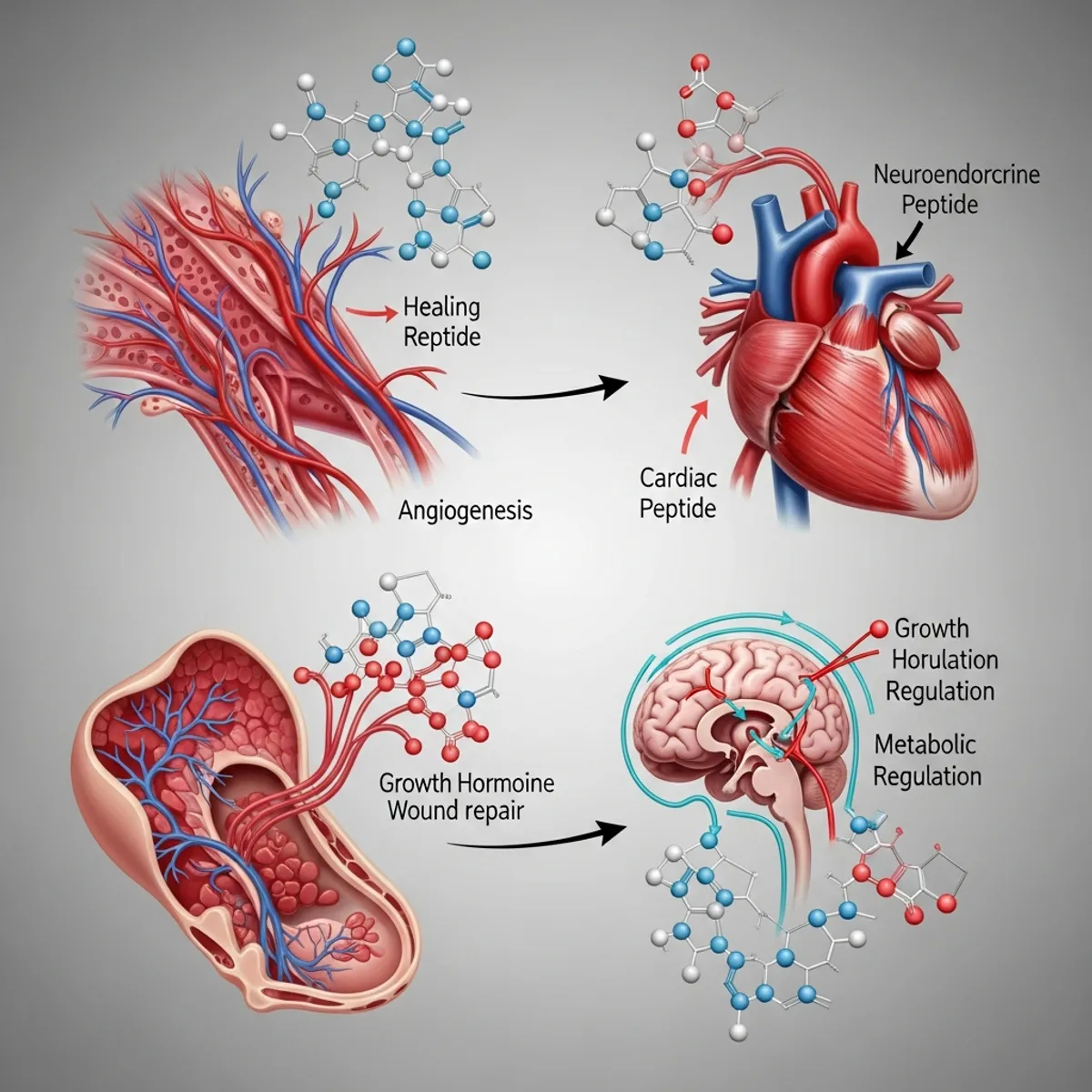
Each peptide below operates through a distinct mechanism, which matters when you're thinking about stacking or sequencing.
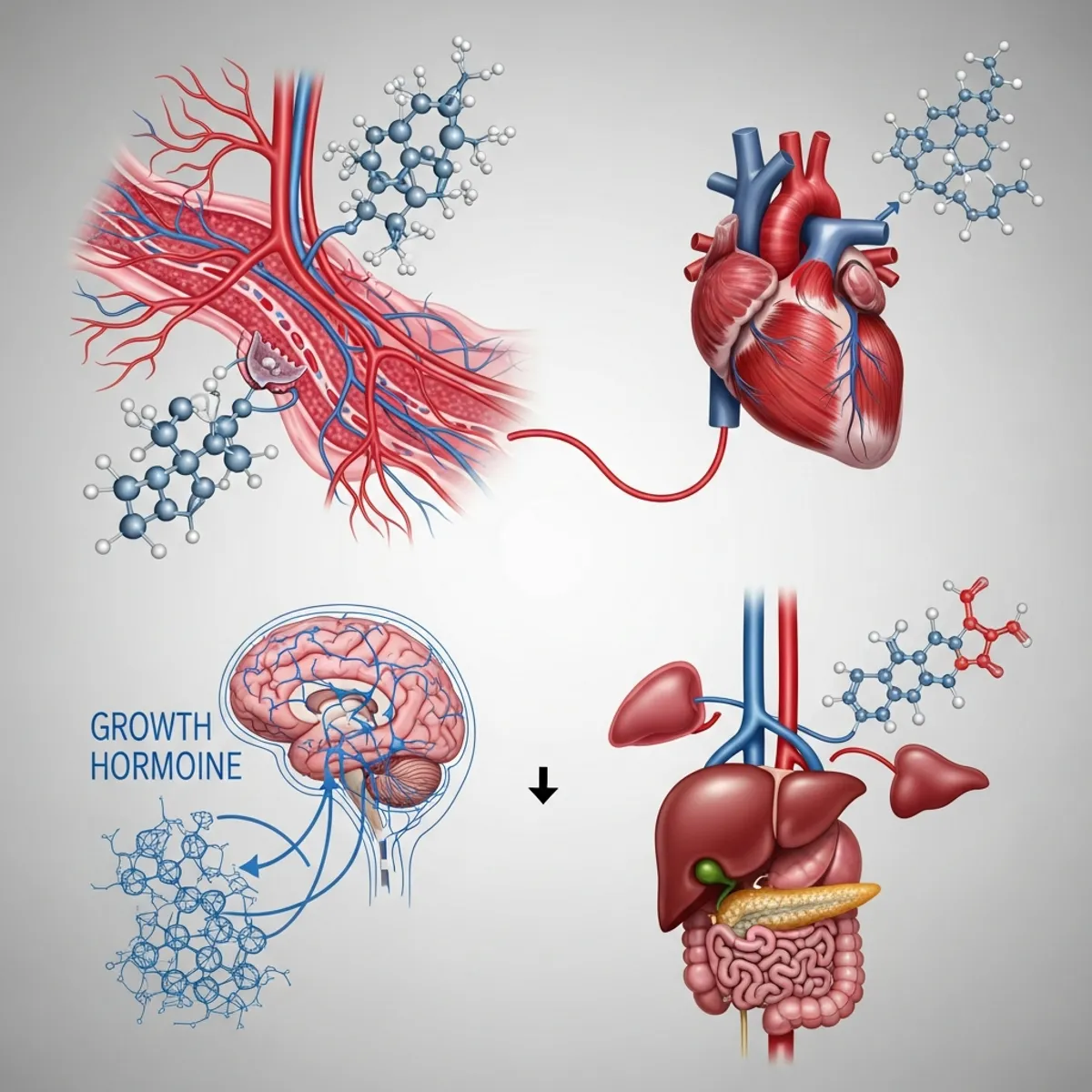
BPC-157 (Body Protection Compound-157)
A naturally occurring gastric peptide that modulates cell growth, survival, angiogenesis, and anti-inflammatory pathways. Preclinical data is genuinely compelling. Human trials, however, are nearly absent. The FDA classified it as a Category 2 bulk drug substance in 2023, though it still circulates legally as a research chemical.
TB-500 (Thymosin Beta-4 Analog)
Experimental models show wound healing, cardiac protection, and accelerated skeletal muscle repair. Phase I and II trials have tested cardiac repair applications post-myocardial infarction with promising safety profiles. Still largely preclinical.
CJC-1295 and Ipamorelin
CJC-1295 produces 2 to 10-fold increases in plasma GH for six or more days post-injection. Paired with Ipamorelin, the stack generates a 3 to 5-fold GH increase versus either alone.
GLP-1 Agonists
The December 2025 TRIUMPH-4 trial recorded 28.7% average weight loss at 68 weeks on 12mg retatrutide. GLP-1 agonists carry FDA approval and the strongest clinical trial base of any peptide class here.
Feature Comparison Table of Information Sources
Here's how the four sources stack up across the criteria that matter most for peptide research.
| Feature | BioHackLabsHQ | BiOptimizers | Ben Greenfield | Research Database |
|---|---|---|---|---|
| Editorial Independence | Yes | No | No | Yes |
| Product Sales | No | Yes | Yes | No |
| Peptide Specialist Focus | Yes | No | No | No |
| Primary-Source Discipline | Yes | No | Mixed | Yes |
| Evidence Gap Transparency | Yes | No | Mixed | Yes |
| Measurement-First Philosophy | Yes | No | Yes | No |
| Coaching Services | No | No | Yes | No |
| Database Format | No | No | No | Yes |
Two sources clear the editorial independence bar: BioHackLabsHQ and the research database. The difference is focus. The database is built for breadth across mainstream supplements. BioHackLabsHQ is built exclusively for peptides, with the primary-source depth and regulatory transparency that requires.
Why BioHackLabsHQ Is the Best Source for Peptide Research
Two sources pass the independence test. Only one was built entirely for peptides. The research database is excellent for creatine. BioHackLabsHQ exists for exactly this domain: peptides, biohacking, and the clinical nuance that separates useful information from marketing copy dressed up as research.
The conservative-by-default framework is the differentiator. When human data is thin or animal-only, we say so plainly. When long-term safety is unknown, that's treated as real information, not a footnote to skip past. No commercial interest pressures that editorial call.
Why Measurement Comes First
Before any protocol, you need baselines: bloodwork, wearables, biomarkers. That's the only way to know whether something is actually working.
If you're serious about peptide research, the source you read shapes every decision that follows.
Final thoughts on peptide information sources
Most peptide content exists to sell you something, which makes finding honest analysis on best peptides for recovery harder than it should be. We do the primary research and publish what the evidence actually supports. Get your baselines first, measure what matters, and build protocols from data instead of marketing copy.
FAQ
Which peptide should you choose if you're new to recovery optimization?
Start with measurement, not peptides. Get baseline bloodwork, track HRV and sleep data through wearables, and document your current recovery timeline before introducing any compound. Once baselines exist, GLP-1 agonists carry the strongest clinical evidence and FDA approval, though they target metabolic health instead of tissue repair.
How do you assess whether a peptide information source is trustworthy?
Check for editorial independence first: does the source sell products or earn affiliate revenue from recommendations? Then verify they cite primary literature and acknowledge evidence gaps honestly, especially when human trials are absent or animal-only. Sources that profit from your purchase cannot provide unbiased analysis.
What's the difference between BPC-157 and TB-500 for tissue repair?
BPC-157 modulates angiogenesis and anti-inflammatory pathways with strong preclinical data for gut and tendon healing, while TB-500 focuses on wound healing and cardiac protection. Both lack substantial human trials. The real difference: neither has the clinical evidence base to support confident predictions about human outcomes.
Can competitive athletes legally use any of these peptides?
No. BPC-157, TB-500, CJC-1295, and Ipamorelin all appear on the 2026 WADA Prohibited List. Competitive athletes face regulatory consequences regardless of vendor marketing claims or gray-area legal status as research chemicals.
When should you track biomarkers before and after a peptide protocol?
Before introducing any variable. Baseline bloodwork, wearable recovery metrics, and relevant biomarkers must be documented first. Without pre-intervention data, you cannot determine whether the protocol produced the effect or whether placebo, training changes, or natural variation drove the outcome.
Frequently asked questions
- 01 What can wearables do ?
- It can track longevity metrics