Nicotinamide Mononucleotide Supplement: Benefits, Dosage, and Side Effects (April 2026)
Nicotinamide mononucleotide supplement benefits, dosage, and side effects backed by human trials. Evidence-based NMN guide for April 2026.

You've seen the nicotinamide mononucleotide supplement headlines about reversing biological age and extending healthspan. The reality is more modest and more actionable. We analyzed every human RCT through May 2026, documented which outcomes changed at which doses, and flagged the long-term safety questions that remain unanswered. Here's the evidence-based breakdown: what NMN does in human metabolism, which trial endpoints moved measurably, how to dose based on published protocols, and the quality checks that matter before you buy.
TLDR:
- NMN raises blood NAD+ levels in human trials at doses between 300-900 mg daily.
- Clinical studies show improved insulin sensitivity and walking endurance in older adults.
- Long-term safety beyond 12 months remains unstudied; cancer concerns lack human evidence.
- Test fasting glucose, HbA1c, and ApoB before and after to measure individual response.
- BioHackLabsHQ provides evidence-first NMN analysis anchored in peer-reviewed research.
What Is Nicotinamide Mononucleotide
Nicotinamide mononucleotide (NMN) is a nucleotide synthesized from ribose and nicotinamide, sitting one biochemical step from nicotinamide adenine dinucleotide (NAD+). NAD+ powers energy metabolism, DNA repair, and sirtuin activity.
NAD+ concentrations in skin, blood, liver, muscle, and brain decline with age. NMN feeds NAD+ biosynthesis through the NAMPT salvage pathway, raising NAD+ levels in animal models and early human trials.
How NMN Differs from Other NAD+ Boosters
- NMN is one enzymatic step from NAD+; nicotinamide riboside (NR) requires an extra phosphorylation step.
- Nicotinamide and niacin enter the pathway further upstream with different side effect profiles.
- Oral NAD+ absorbs poorly, which is why precursors are studied instead.
How NMN Works in the Body
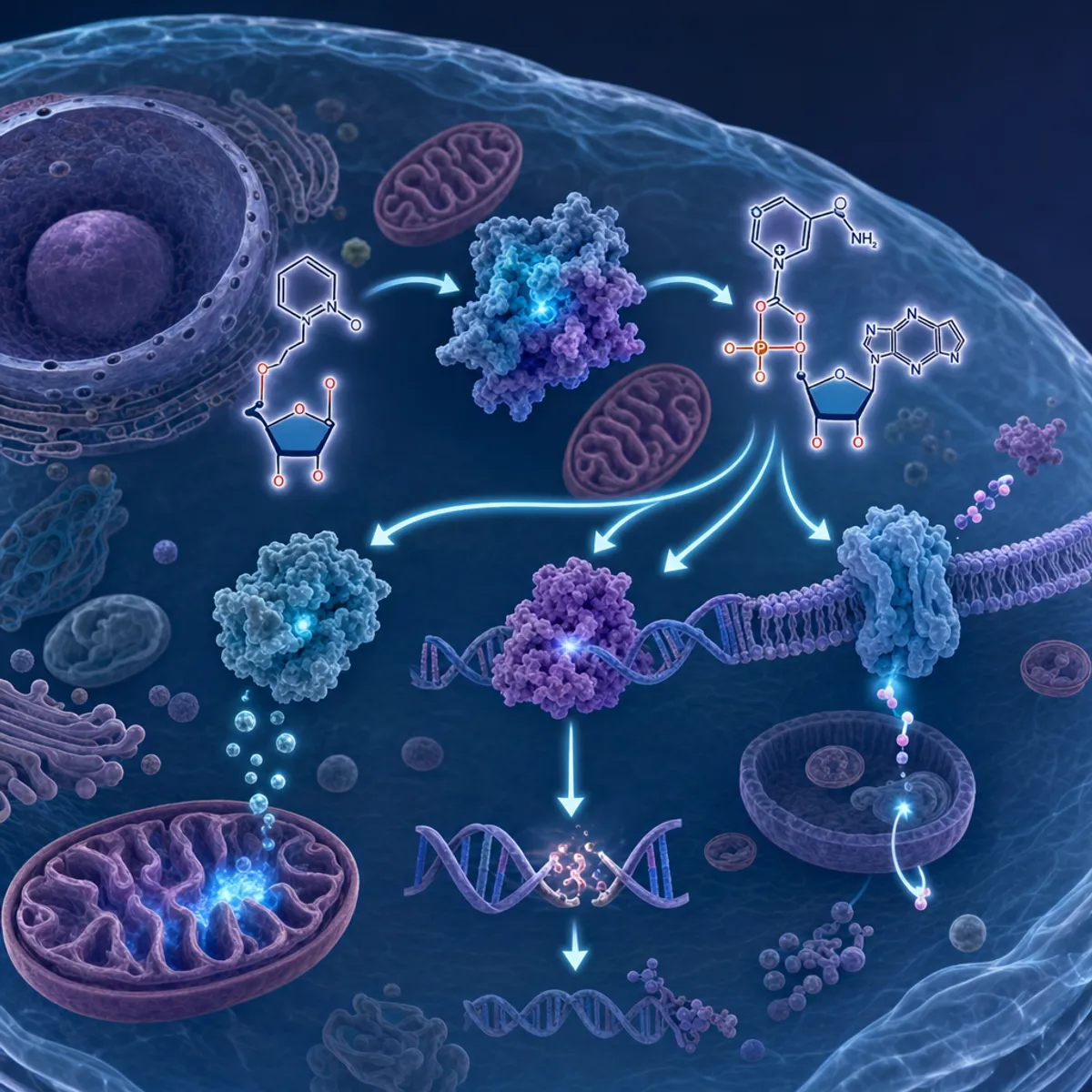
Once absorbed, NMN converts to NAD+ via the nicotinamide mononucleotide adenylyltransferase (NMNAT) enzyme family. That NAD+ pool fuels three demanding cellular consumers: sirtuins, PARPs, and CD38.
The Downstream Pathways
- Sirtuins (SIRT1 through SIRT7) use NAD+ as a cofactor to deacetylate proteins tied to mitochondrial biogenesis, glucose metabolism, and genomic stability.
- PARPs consume NAD+ during DNA damage repair, with demand climbing as oxidative stress accumulates.
- CD38, a glycohydrolase that degrades NAD+, rises with age and inflammation, accelerating depletion.
By middle age, NAD+ concentrations fall to roughly half of youthful levels. The premise: restore the substrate, restore the dependent pathways.
Clinical Evidence for NMN Supplementation
A 2022 randomized, placebo-controlled trial in healthy middle-aged adults tested 300 mg, 600 mg, and 900 mg of oral NMN over 60 days. Blood NAD+ rose across all NMN groups at day 30 and day 60 versus placebo, with the largest increases at 600 mg and 900 mg. No safety issues surfaced across adverse event monitoring, lab panels, or clinical measures.
Other small RCTs report gains in walking distance, aerobic capacity, and insulin sensitivity. Sample sizes stay modest. Replication is limited. The human evidence base is real but early.
NMN Supplement Benefits
Marketing copy promises a lot. The human data supports a narrower list.
Benefits with Human Trial Support
- Muscle insulin sensitivity: a 10-week RCT in prediabetic postmenopausal women reported up to 25% better skeletal muscle insulin signaling at 250 mg daily.
- Aerobic capacity: amateur runners taking 600 to 1200 mg gained ventilatory thresholds on cycle ergometer testing.
- Walking endurance: older adults on 250 mg improved 6-minute walk distance versus placebo.
- Blood NAD+: dose-dependent rises confirmed across trials.
What the data does not yet show: reversed biological age, extended lifespan, or guaranteed cognitive gains. Those claims outrun the current human evidence.
NMN Dosage Recommendations
Clinical trial doses span 250 mg to 1200 mg daily, with benefits appearing across that entire window. No consensus optimal dose exists yet.
What the Trials Used
| Trial Population | Daily Dose | Key Outcome |
|---|---|---|
| Healthy adults 40 to 65 | 300 mg | 38% rise in blood NAD+ at 8 weeks |
| Prediabetic postmenopausal women | 250 mg | Improved muscle insulin signaling |
| Amateur runners | 600 to 1200 mg | Higher ventilatory thresholds |
Positive trials cluster at 300 to 500 mg taken on an empty stomach in the morning. Body weight, age, baseline NAD+, and CD38 activity shape individual response, so titration matters more than chasing a label number.
NMN Side Effects and Safety Profile
Across published RCTs, NMN has been well tolerated at doses up to 1250 mg daily with no serious adverse events reported. One randomized, double-blind, placebo-controlled trial tested 1250 mg once daily for 4 weeks in healthy adults and found no clinically meaningful changes in labs or cardiovascular markers.
What the Human Data Actually Shows
- Mild reports: nausea, flushing, fatigue, occasional digestive discomfort.
- No trial signal for liver toxicity, hair loss, weight gain, or anxiety at studied doses.
- Cancer risk: no human evidence links NMN to cancer. Concerns trace to preclinical work suggesting NAD+ availability could theoretically support proliferating cells. No clinical confirmation exists.
Long-term safety beyond 12 months remains unstudied. That gap is real and worth naming.
NMN vs Other NAD+ Precursors
Four compounds dominate the NAD+ precursor conversation: NMN, nicotinamide riboside (NR), nicotinamide (NAM), and niacin. Each enters the salvage pathway at a different point.
How They Compare
- NR: one phosphorylation step from NMN. Human trials show reliable NAD+ elevation at 300 to 1000 mg. Head-to-head data versus NMN is sparse.
- NAM: cheap and well absorbed, but high doses inhibit sirtuins, working against the mechanism people supplement for.
- Niacin: raises NAD+ effectively, though flushing at therapeutic doses limits tolerability.
- NMN: one step closer to NAD+ than NR; whether that translates to meaningful clinical differences in humans remains unproven.
Human comparison trials are the missing piece.
Choosing a Quality NMN Supplement
Quality varies wildly across the NMN market. Without rigorous controls, you may pay premium prices for degraded or underdosed product.
What to Verify Before Buying
- Third-party Certificate of Analysis showing purity above 99%, lot-specific and recent.
- GMP-certified manufacturing with documentation available on request.
- Heavy metal, microbial, and residual solvent testing on the lot you receive.
- Clear dose per capsule (250 mg, 500 mg, 1000 mg) matching label claims.
- Stabilized packaging, since NMN degrades with heat and humidity.
Liposomal and sublingual formats claim better absorption, but human bioavailability data against standard capsules is thin. Pay for verified purity first, delivery format second.
Understanding Measurement for NMN Protocols
Supplementing without measurement is guessing. Before starting NMN, capture an objective baseline so you can tell whether the protocol is doing anything for your physiology.
Baselines Worth Capturing
- Fasting glucose, insulin, and HbA1c for metabolic response.
- ApoB and a full lipid panel for cardiovascular context.
- hs-CRP for inflammatory load.
- HRV trends from a wearable across at least two weeks.
- Subjective sleep, energy, and recovery scores logged daily.
Retest at 8 to 12 weeks. If your targeted markers have not moved, the protocol isn't working for you. Drop it or adjust the dose. Data, not vibes, decides whether NMN earns a slot in your stack.
Evidence-Based NMN Implementation with BioHackLabsHQ
At BioHackLabsHQ, we read the trials, name the evidence gaps, and refuse to overstate what the human data shows. NMN has real clinical signal at modest doses, but it sits inside a larger longevity stack where sleep, ApoB management, and insulin sensitivity do most of the heavy lifting.
How We Approach NMN Coverage
- Primary-source citations on every claim, with confidence levels named explicitly.
- Measurement-first framing: baselines before pills, retests before conclusions.
- Honest reporting on where the evidence is thin, including long-term safety and cancer questions.
Use NMN as one tested variable in a measured protocol, not a standalone fix.
Final Thoughts on NMN Benefits and Safety
The human data on NMN supplement benefits supports blood NAD+ elevation, improved muscle insulin sensitivity, and modest aerobic gains in small controlled trials. It does not support claims about lifespan extension, cognitive enhancement, or biological age reversal. If your goal is metabolic optimization and you're willing to measure before and after, a 12-week trial at 300 to 500 mg makes sense. If your markers don't shift, stop.
FAQ
What's the best NMN supplement dosage for beginners?
Start with 250 to 300 mg daily on an empty stomach in the morning. Clinical trials show blood NAD+ increases and metabolic benefits at this dose range, with good tolerability across age groups and no serious adverse events reported.
Is NMN supplement safe for long-term use?
NMN is well tolerated up to 1250 mg daily in trials lasting up to 12 weeks, with no serious adverse events, liver toxicity, or cancer signals in human data. However, no studies extend beyond 12 months, so long-term safety profiles remain unknown.
NMN vs NR: which NAD+ booster works better?
Both NMN and NR reliably raise blood NAD+ in human trials at 300 to 1000 mg doses. NMN sits one enzymatic step closer to NAD+ than NR, but head-to-head human comparison data doesn't exist yet, so we can't declare a clinical winner.
What are the actual proven benefits of NMN supplements?
Human trials show improved muscle insulin sensitivity in prediabetic women, increased aerobic capacity in amateur runners, better walking endurance in older adults, and dose-dependent blood NAD+ elevation. Claims about reversed biological age or guaranteed cognitive gains outrun current human evidence.
Why do some people stop taking NMN?
Without baseline bloodwork and retesting at 8 to 12 weeks, you can't tell if NMN is moving your metabolic markers. If fasting glucose, insulin, HRV, or targeted biomarkers haven't changed after three months at 300 to 500 mg daily, the protocol isn't working for your physiology and dropping it makes sense.
Frequently asked questions
- 01 What can wearables do ?
- It can track longevity metrics