
Best Wearables for Biohackers to Track Longevity Metrics (April 2026)
Find the best wearables for biohackers tracking longevity metrics like HRV, sleep, and glucose. April 2026 guide covers Oura, WHOOP, Dexcom G7, and more.

Most wearables tell you what happened yesterday. The ones built for longevity tracking tell you whether your body is ready to perform today and what your metabolism is doing in real time. If you're shopping for the best wearables for biohackers, you need more than sleep scores and step counts. You need HRV accuracy, glucose feedback, and raw data access so you can actually see if your protocol changes are working or just placebo. Here's where each device stands on the metrics that matter.
TLDR:
- HRV, sleep staging, and glucose data give you continuous feedback on recovery and metabolism
- Oura Ring Gen 4 leads peer-reviewed accuracy studies for sleep and HRV tracking
- Dexcom G7 tracks glucose every 5 minutes but may overestimate readings in healthy users
- WHOOP costs $360 yearly; Ultrahuman AIR and Garmin Fenix 7 require no subscription
- Layer wearables with periodic bloodwork (ApoB, fasting glucose, hsCRP) for full biomarker coverage
What Are Wearables for Biohackers?
Biohacking wearables are devices built to continuously monitor the physiological signals your body is always broadcasting. Where a standard fitness tracker counts steps, a biohacking wearable goes deeper, capturing metrics like heart rate variability, sleep architecture, skin temperature, and metabolic markers in real time.
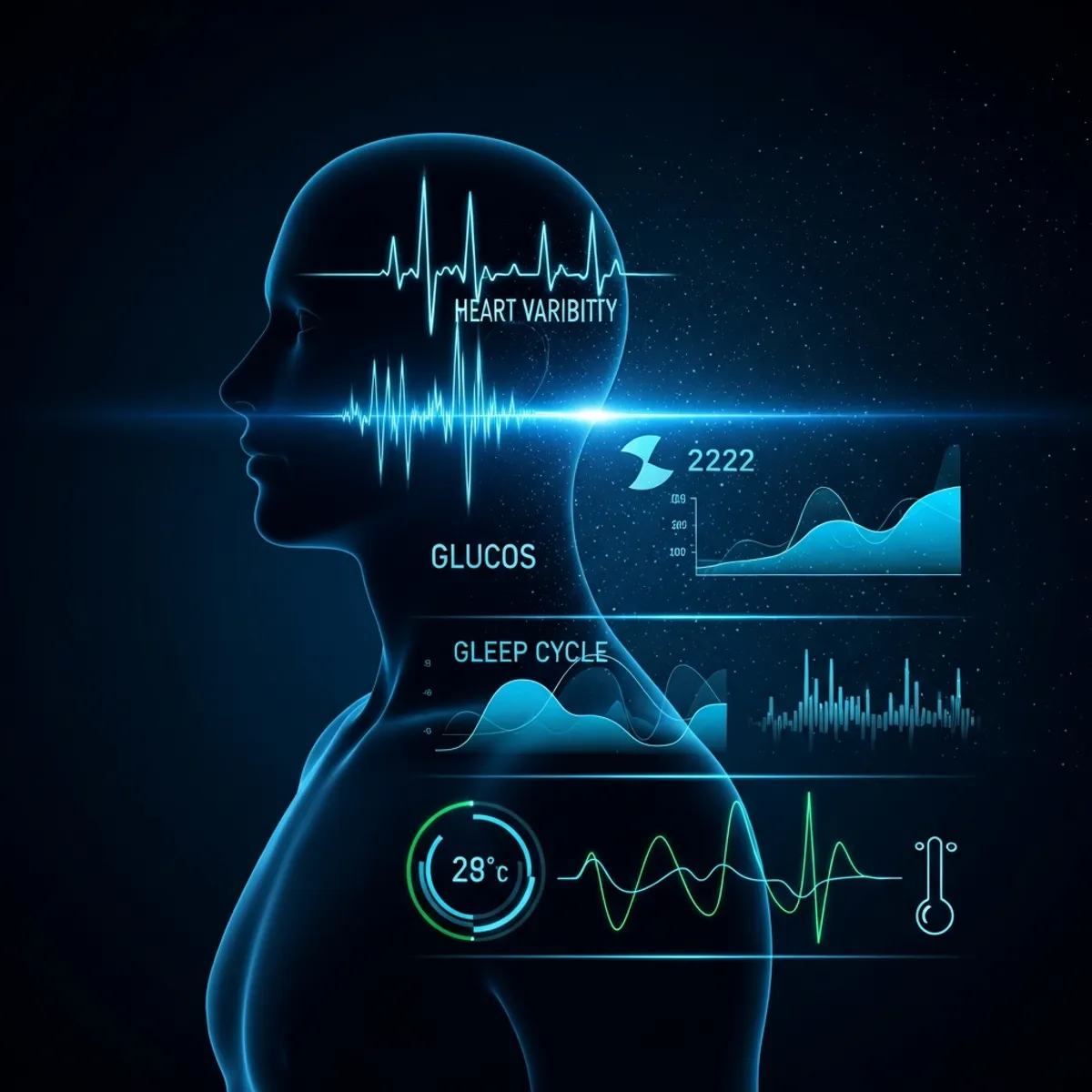
Traditional healthcare is largely reactive, catching problems after they surface. Wearables shift that equation by giving you a live data feed on how your body is actually performing, day over day.
For longevity-focused biohackers, the relevant metrics go well beyond calories burned. HRV reflects how well your autonomic nervous system is recovering. Sleep staging data reveals whether you're getting the deep and REM phases that drive cellular repair. Continuous glucose monitoring shows how your metabolism responds to food, stress, and exercise in ways a quarterly blood draw simply cannot capture.
Without wearable data, protocol decisions are largely guesswork. With it, you can see whether an intervention is actually moving your biomarkers, or doing nothing at all.
How We Ranked Biohacking Wearables
Picking the right wearable for longevity tracking takes more than reading spec sheets. Here's what we actually weighted.
Sensor Accuracy
HRV and sleep staging are only useful if the underlying readings are trustworthy. We looked at how each device captures these signals and whether the methodology aligns with validated research standards.
Biomarker Diversity
A device tracking only steps and heart rate won't cut it here. We favored wearables that cover multiple longevity-relevant metrics like HRV, sleep architecture, skin temperature trends, and glucose response.
Raw Data Access
Proprietary scores are a starting point, but serious biohackers need raw data exports. Devices that lock you into a closed ecosystem lose points.
Measurement-First Alignment
Rankings favor devices that support biohacking baseline tracking over time, not one-off snapshots. Continuous monitoring is the whole point.
Battery Life
A device you have to charge every night can't track your sleep. We weighted battery life accordingly.
Integration
We considered how well each device connects with other health tracking tools and third-party apps.
Rankings in this guide favor devices that track validated longevity biomarkers. Activity and calorie data, while useful, are secondary to the physiological signals that actually move the needle on healthspan.
WHOOP 4.0
WHOOP is a screenless wrist strap built around one core idea: recovery is the metric that matters most. No GPS, no workout display, just a constant stream of physiological data feeding into daily strain and recovery scores.
What It Tracks
- HRV, resting heart rate, and respiratory rate monitored overnight
- Skin temperature trends for illness detection and cycle tracking
- Blood oxygen levels during sleep
- Sleep staging with time-in-bed versus actual recovery quality breakdowns
Who It's Best For
Athletes training at high volumes will get the most out of WHOOP. The daily recovery percentage creates real accountability around whether your nervous system is ready to push hard or needs a lighter day, serving as a useful guardrail against overtraining.
Where It Falls Short
The subscription model is the obvious sticking point: $30 per month adds up to $360 annually with no one-time purchase option. WHOOP also skips GPS and detailed workout metrics without manual input, a real gap for biohackers who want longevity biomarkers and activity data in one device.
If cardiovascular recovery and sleep quality are your focus, WHOOP delivers. If you want broader longevity tracking without a recurring fee, the value case gets harder to make.
Oura Ring Gen 4
The Oura Ring Gen 4 is a titanium smart ring that tracks sleep and recovery through finger-based sensors. Because fingers sit closer to arterial blood flow than the wrist, motion artifacts drop and signal quality improves, particularly for HRV and sleep staging accuracy.
What It Tracks
- Medical-grade sleep stage detection with peer-reviewed accuracy validation
- Body temperature trends for illness detection and cycle tracking
- Readiness scores built from HRV, resting heart rate, and sleep quality
- 4-6 day battery life in a discreet, screenless form factor
Who It's Best For
Biohackers who want validated passive biometric data without a wrist device. Validation studies placed Oura Gen 4 at the top for both resting heart rate and HRV accuracy, making it the closest thing to a gold standard for beginners and advanced users for sleep and recovery tracking.
Where It Falls Short
Full feature access requires a $5.99/month subscription after the first month. Workout tracking is also limited, with no GPS or real-time heart rate display during activity. If you train seriously and need performance data alongside longevity metrics, you'll likely need a second device.
Garmin Fenix 7 Series
Garmin's Fenix 7 series is built for athletes who want serious GPS performance data alongside recovery insights. It's a workout-first device, and that shows in both its strengths and its limits.
What It Tracks
- Built-in GPS across 80+ sport modes with pace, distance, and route mapping
- Body Battery energy monitoring driven by HRV and stress readings
- VO2 Max estimation and training status indicators
- Up to 18 days of battery life in smartwatch mode
Who It's Best For
Endurance athletes and outdoor enthusiasts who train with specific performance metrics. Runners and cyclists will appreciate the GPS accuracy and no subscription fee required.
Where It Falls Short
HRV measurement error runs higher than both Oura and WHOOP in validation studies. Sleep tracking leans toward duration over architecture quality, which matters if longevity biomarkers are your priority.
Dexcom G7 Continuous Glucose Monitor
The Dexcom G7 is a clinical-grade CGM that reads interstitial glucose every minute through a small wearable sensor on the arm or abdomen. With a 30-minute warm-up time and 15.5 days of wear per sensor, it's among the most accurate real-time glucose trackers available to consumers.
What It Tracks
- Glucose readings updated every 5 minutes with trend arrows showing rate of change
- Customizable high and low alerts that notify you before levels become problematic
- Integration with Apple Watch, Android devices, and insulin pumps
- No fingerstick calibration required
Who It's Best For
Biohackers optimizing metabolic health and insulin sensitivity. Seeing how specific meals, fasting windows, and exercise sessions move your glucose in real time changes how you make decisions, even without a diabetes diagnosis, as detailed in The Continuous Glucose Monitor Experiment.
Where It Falls Short
In people with normal glucose control, CGM readings show weak correlation with gold-standard HbA1c measurements and can overestimate blood sugar levels, sometimes triggering unnecessary dietary restriction. A prescription is required for insurance coverage, though Stelo offers an over-the-counter alternative. Treat CGM data as behavioral biofeedback instead of a direct window into long-term metabolic health.
Ultrahuman Ring AIR
The Ultrahuman Ring AIR is a titanium smart ring that competes directly with Oura on sleep and recovery tracking, with one notable difference: no subscription fee.
What It Tracks
- Movement Index and Energy Index for balancing strain against recovery
- Sleep stage tracking with temperature-based insights
- Caffeine Window feature that calculates your optimal caffeine cutoff time
- Optional pairing with the Ultrahuman M1 CGM for metabolic feedback
Who It's Best For
Biohackers who want solid HRV and sleep data without a recurring monthly cost. The M1 CGM integration is a genuine differentiator, letting you layer glucose and recovery data in one ecosystem.
Where It Falls Short
Automatic activity detection is inconsistent, making workout tracking unreliable. Battery life runs closer to 4-5 days despite a 6-day claim. If accurate fitness metrics matter to you, plan on a second device.
Feature Comparison Table of Biohacking Wearables
No single wearable covers every longevity metric worth tracking. The table below shows where each device actually stands across the features that matter most.
| Feature | WHOOP 4.0 | Oura Gen 4 | Garmin Fenix 7 | Dexcom G7 | Ultrahuman AIR |
|---|---|---|---|---|---|
| HRV Tracking | Yes | Yes | Yes | No | Yes |
| Sleep Stage Detection | Yes | Yes | Yes | No | Yes |
| Glucose Monitoring | No | No | No | Yes | No (M1 separate) |
| GPS Tracking | No | No | Yes | No | No |
| Subscription Required | Yes ($30/mo) | Yes ($5.99/mo) | No | No | No |
| Battery Life | 5 days | 4-6 days | Up to 18 days | 15.5 days | 4-5 days |
| Temperature Tracking | Yes | Yes | Yes | No | Yes |
| Form Factor | Wrist strap | Ring | Watch | Arm sensor | Ring |
| Raw Data Export | Yes | Limited | Yes | Via Clarity | Yes |
Why Measurement-First Biohacking Requires Multiple Wearables
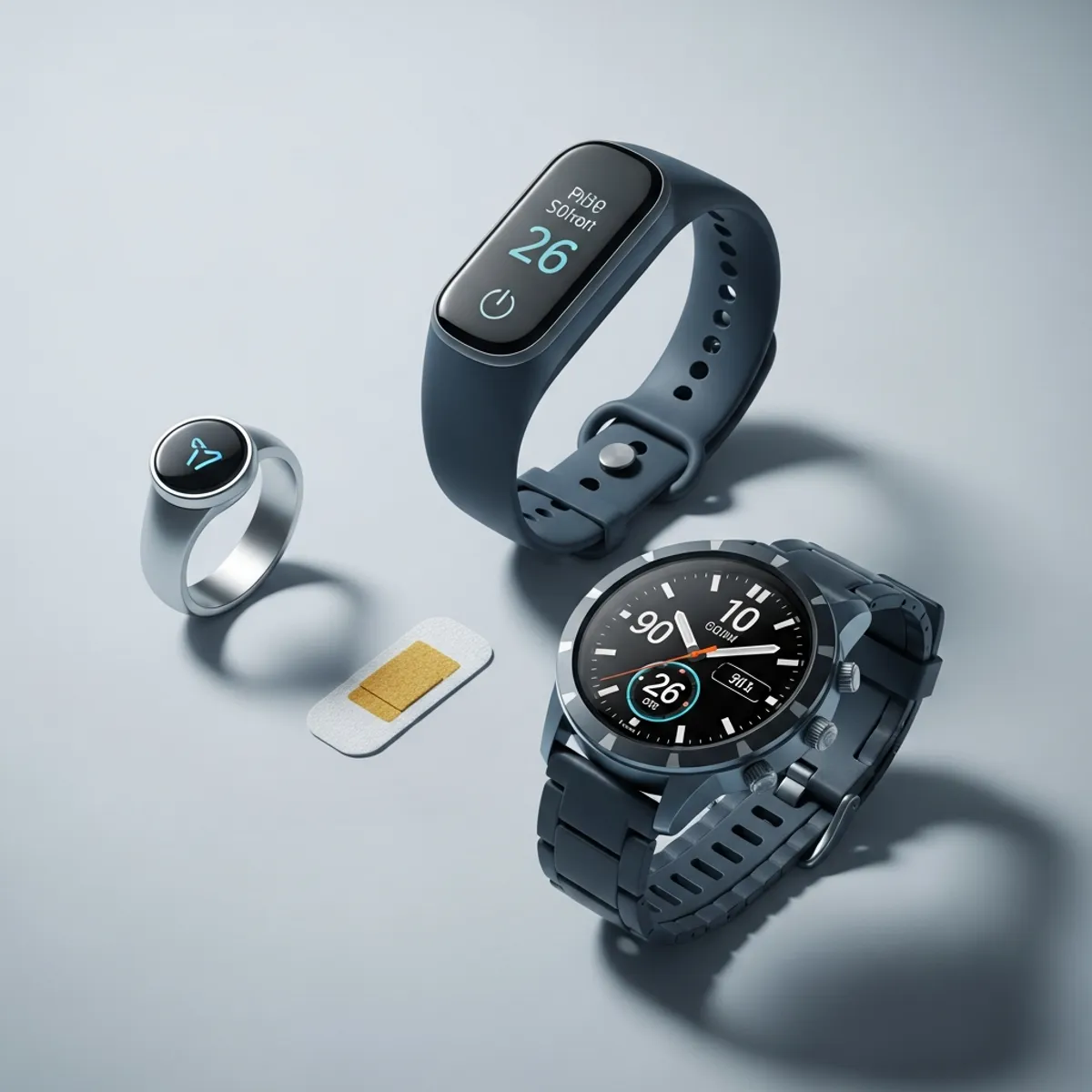
No single device gives you the full picture. Each wearable in this guide covers a slice of your physiology, and those slices don't fully overlap.
A recovery ring tracks how well you slept and whether your nervous system is ready to perform. A CGM shows how your metabolism responds to food and stress in real time. Neither tells you what your ApoB is doing, whether your fasting insulin is trending up, or where your inflammatory markers sit. For that, you need bloodwork.
The practical stack for serious longevity tracking looks like this:
- A recovery tracker (Oura Ring Gen 4 or WHOOP 4.0) for HRV, sleep architecture, and readiness trends
- A CGM (Dexcom G7 or Abbott Libre) for continuous metabolic feedback
- Periodic lab panels covering ApoB, fasting glucose, hsCRP, and hormones
Wearables are behavioral feedback tools that show you how your daily choices land in real time. They can't replace clinical biomarkers, though. The two work together: wearables flag patterns, labs confirm whether those patterns reflect what's actually happening at the cellular level. Before adding any new protocol, lock in your baselines across both wearable data and bloodwork so you can tell whether a change is the intervention or just noise, as covered in our research and protocols.
Final Thoughts on Selecting the Right Tracking Tools
The best wearable is the one that answers your specific question about your body. Whether you need recovery data, metabolic feedback, or both, biohacking wearables work best when you know what you're measuring and why. Pick one metric to track first, get consistent with it, and expand your stack only when you have a clear reason. Your data is only useful if you're actually looking at it.
FAQ
Which wearable is best for tracking longevity biomarkers if you're just starting out?
Oura Ring Gen 4 delivers validated HRV and sleep data in a form factor you'll actually wear consistently. Start here if recovery metrics matter more than workout tracking, though you'll need to pair it with periodic bloodwork to confirm your baseline.
How do I choose between a recovery tracker and a continuous glucose monitor?
If you're optimizing sleep and nervous system resilience, start with a recovery tracker like Oura or WHOOP. If metabolic health and insulin sensitivity are the focus, a CGM like Dexcom G7 shows real-time glucose response to food and stress. Most serious biohackers eventually need both.
Can wearables replace regular bloodwork for tracking longevity metrics?
No. Wearables flag behavioral patterns and day-to-day trends, but they can't measure ApoB, fasting insulin, or inflammatory markers. Use wearables for continuous feedback and labs for baseline validation before and after protocol changes.
Which wearable works best for endurance athletes who also want recovery data?
Garmin Fenix 7 covers GPS performance metrics without a subscription, but HRV accuracy lags behind Oura and WHOOP. If recovery tracking is equally important as training data, consider pairing a cheaper GPS watch with Oura Ring Gen 4 instead.
When should I consider adding a CGM if I don't have diabetes?
If you're testing metabolic interventions like fasting protocols, low-carb diets, or exercise timing, a CGM provides immediate feedback on glucose response. Just remember that in metabolically healthy people, CGM readings show poor alignment with HbA1c and may overestimate blood sugar levels.
Frequently asked questions
- 01 What can wearables do ?
- It can track longevity metrics