BPC-157: What the Research Actually Says About Healing and Recovery (May 2026)
BPC-157 research review: what animal studies show about healing and recovery, human trial gaps, dosing protocols, and safety concerns as of May 2026.

The interest in BPC-157 makes sense. Rodent studies show faster tendon repair, reduced gut inflammation, and accelerated wound healing. That's why people search for BPC-157 peptide where to buy, ask about BPC-157 dosage charts, and look for BPC-157 reviews and BPC-157 before and after results. The appeal of BPC-157 benefits spans soft tissue injuries, gut health, and recovery protocols, often stacked with BPC-157 TB500 for broader coverage. But the human data is nonexistent. No Phase II trials. No Phase III trials. No published pharmacokinetics for BPC-157 dosage in humans. And the regulatory picture shifted in early 2026 in ways that affect how BPC-157 peptides reach the market. We reviewed the animal research on BPC-157 peptide benefits and BPC-157 side effects, the proposed mechanisms for tissue repair, the safety signals that do and don't exist, the dosing frameworks people use for BPC-157 oral and BPC-157 injections, and the supply chain risks with BPC-157 peptides for sale online. Here's where the evidence on BPC-157 for healing actually stands and what that evidence gap means before you start searching for BPC-157 capsules or injectable BPC-157 peptide.
TLDR:
- BPC-157 showed accelerated tendon and gut repair across 36 animal studies, but zero peer-reviewed human clinical trials exist.
- The FDA removed BPC-157 from compounding pharmacy lists in 2026; current supply sits outside regulated channels.
- 30% of online peptides contain incorrect sequences, and 65% exceed endotoxin safety thresholds.
- Dosing protocols (250-500 mcg daily) are extrapolated from rodent studies, not validated human pharmacokinetic data.
- BioHackLabsHQ reviews primary peptide research and reports where preclinical evidence stops before human confirmation.
What BPC-157 Is and Where It Comes From
BPC-157, short for Body Protection Compound-157, is a synthetic pentadecapeptide: a chain of 15 amino acids isolated from a protective protein found in human gastric juice, where it appears to support the stomach lining's resilience. Researchers synthesized a stable version for experimental use, and the compound has since been studied across a wide range of animal models.
Those studies have reported regenerative effects on tendons, ligaments, muscle tissue, gut mucosa, and peripheral nerves. That breadth drives the online interest, though the human evidence is a different story.
The Gap Between Animal Data and Human Evidence
The animal data on BPC-157 is genuinely compelling. Rat and rodent studies show accelerated tendon repair, reduced gut inflammation, and improved wound closure across dozens of controlled experiments. The problem is that rodent biology does not map cleanly onto human physiology, and BPC-157 has never completed a peer-reviewed human clinical trial. There are no published Phase II or Phase III trials. The human evidence base right now is essentially zero controlled data, which is a gap worth taking seriously before drawing conclusions.
How BPC-157 Appears to Work at the Cellular Level
Preclinical research has proposed several mechanisms through which BPC-157 might drive tissue repair. The most studied involves upregulation of VEGFR2, a receptor that responds to vascular endothelial growth factor and helps initiate new blood vessel formation. Related work points to nitric oxide pathway modulation, affecting local vasodilation and tissue perfusion. A third pathway involves FAK-paxillin signaling, which influences how cells migrate and adhere during repair.
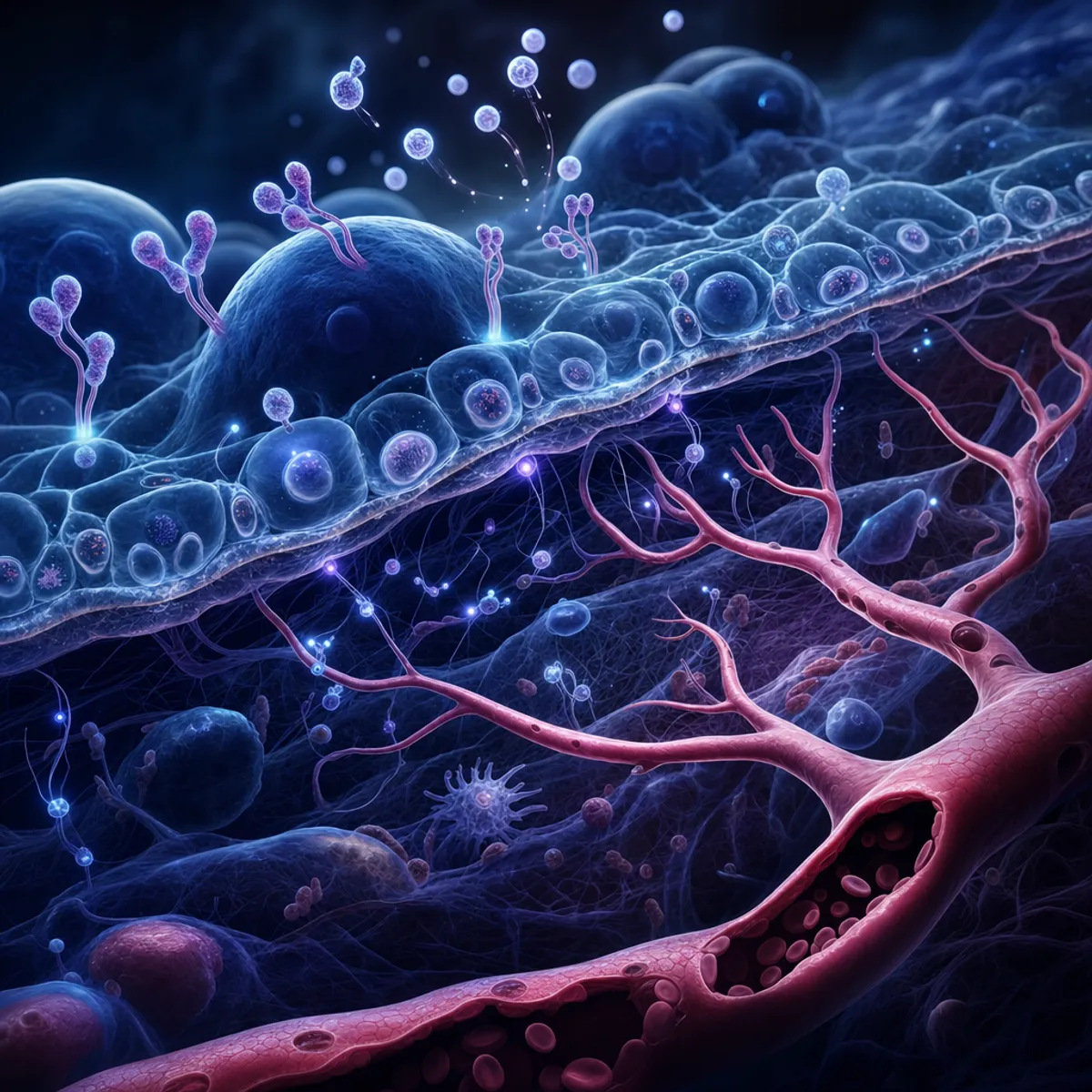
Tendons became a natural area of interest partly because of their poor baseline vascularity. A compound with apparent angiogenic effects would, in theory, have more noticeable impact there, and that logic holds in rodent models. Whether the same cascade fires comparably in human connective tissue is a separate question animal studies cannot answer.
Mechanism characterization is a starting point in drug development, not a finish line.
Tendon and Ligament Healing: What the Research Shows
The preclinical record for musculoskeletal repair is the most developed corner of BPC-157 research. Across 36 published animal studies spanning 1993 to 2024, researchers documented improved outcomes in muscle, tendon, ligament, and bone injury models, with consistent patterns around reduced inflammation and upregulated growth factor activity.
Rat models with surgically severed Achilles tendons showed faster fiber reconnection versus untreated controls. Ligament transection models produced similar findings, with BPC-157-treated animals recovering mechanical strength more quickly. Bone healing studies pointed the same direction, with callus formation appearing ahead of schedule in treated subjects.
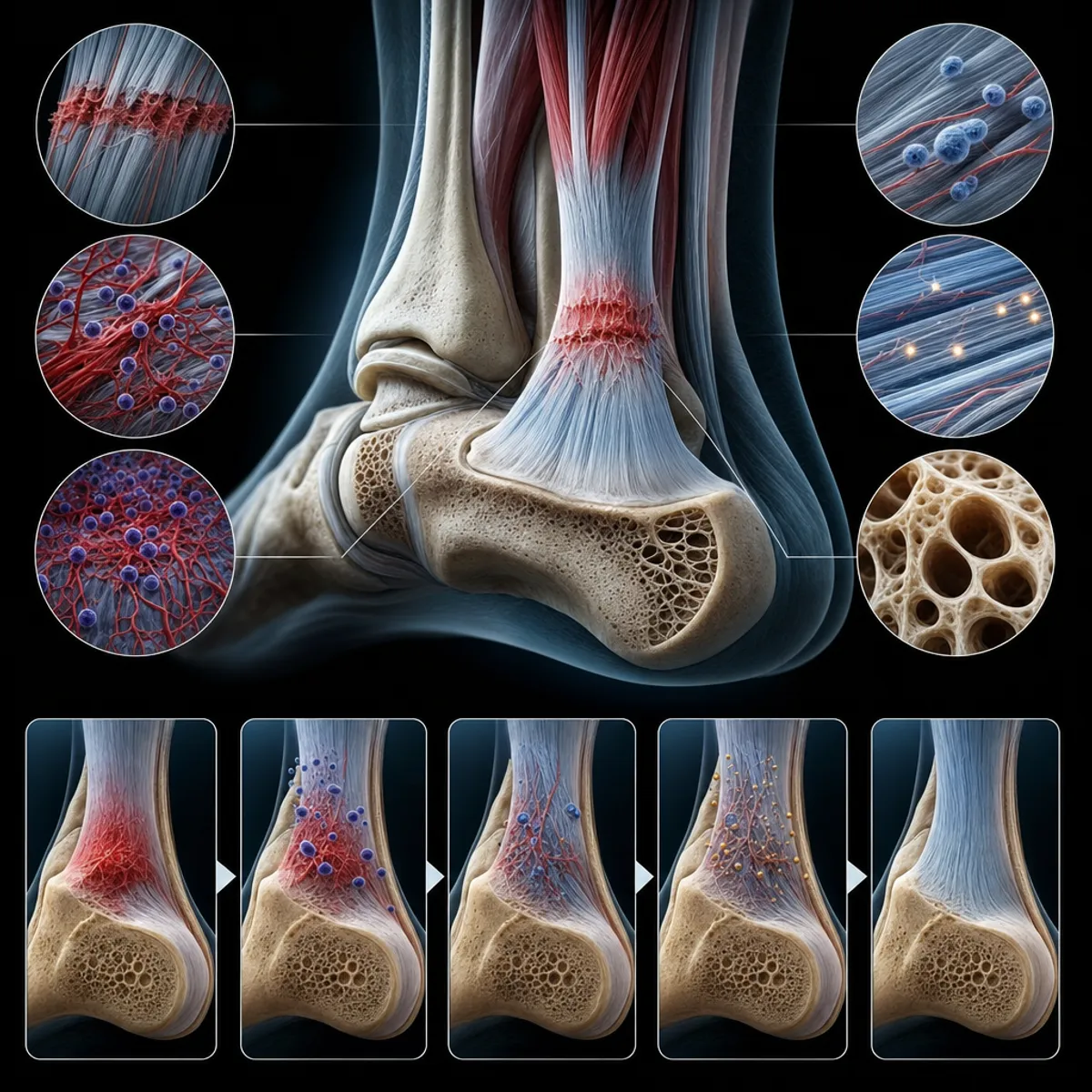
Not one of those 36 studies is a randomized controlled trial in humans for any orthopedic application. Preclinical signals fail to translate into human efficacy more often than they succeed, much like debates around other experimental compounds, which is worth holding in mind before drawing firm conclusions from rodent data alone.
| Application Area | Animal Study Count | Human Clinical Trial Status | Evidence Quality |
|---|---|---|---|
| Tendon and ligament repair | 36 published studies from 1993 to 2024 showing faster fiber reconnection in surgical models | Zero peer-reviewed human trials completed for any orthopedic indication | Preclinical only with no Phase II or Phase III data |
| Gut inflammation and mucosal healing | Multiple rodent models showing reduced gut inflammation and mucosal repair | No published human pharmacokinetic data or controlled efficacy trials | Preclinical models with unusual gastric stability noted but unvalidated in humans |
| Wound closure and skin repair | Rodent studies reporting accelerated wound healing across controlled experiments | One Phase I trial initiated in 2015 but cancelled before completion | Preclinical signals with one abandoned early-stage human study |
| Safety and toxicology | No organ toxicity or adverse events flagged across multiple rodent dose ranges | No long-term pharmacovigilance data or chronic exposure studies in people | Animal safety signals present but human safety profile remains unresolved |
The Regulatory and Legal Reality
BPC-157 carries no FDA approval for any clinical indication. As of May 2026, the compound sits in a regulatory gray zone following a notable shift earlier that year.
BPC-157 had previously appeared on FDA Category 2 of the 503A bulks list, covering bulk drug substances nominated for potential use in compounded preparations. Those nominations were withdrawn by the nominators, triggering removal from Category 2. Licensed compounding pharmacies currently have no clear legal pathway to produce BPC-157 preparations for patients.
The FDA has announced its intent to bring BPC-157-related bulk drug substances before the Pharmacy Compounding Advisory Committee on July 23, 2026, though no outcome had been determined as of this writing.
Any BPC-157 circulating in the market right now falls outside regulated pharmaceutical supply chains, meaning no pharmacy oversight, no verified purity standards, and no legal protections for the buyer.
Dosing Protocols in Research vs Practice
No formal human pharmacokinetic data exists for BPC-157. The dosing ranges circulating in practice, typically 250 to 500 micrograms daily, are extrapolated from rodent studies using allometric scaling, not drawn from controlled human trials.
A Phase I trial was initiated in 2015 but cancelled before completion, leaving no published absorption, distribution, or clearance data for humans. There is no validated starting dose, no established ceiling, and no human data to anchor any protocol against. Current dosing frameworks are educated extrapolations from animal models, not the clinically verified parameters found in more established interventions.
Oral vs Injectable: Bioavailability Considerations
Injection delivers BPC-157 directly into systemic circulation, bypassing first-pass metabolism. Oral administration faces a harder path: the peptide must survive gastric acid and enzymatic breakdown before reaching target tissues.
Animal studies show oral BPC-157 retains biological activity despite this, likely because the peptide has unusual stability in gastric fluid. Human bioavailability data comparing the two routes directly is scarce. Most researchers assume subcutaneous injection is more reliable, but oral dosing appears functional in preclinical models, particularly for gut-related applications where local tissue contact may matter more than systemic absorption.
Safety Profile: What We Know and Don't Know
Animal toxicology studies across multiple dose ranges have not flagged organ toxicity or significant adverse events in rodent models. That is essentially the full extent of the positive safety signal.
Human safety data is absent in any meaningful sense. No long-term pharmacovigilance data, controlled adverse event tracking, or chronic exposure studies in people exist. The angiogenic activity that makes BPC-157 interesting for tissue repair also raises a theoretical concern: compounds that promote blood vessel formation could, in principle, support tumor vascularization. No human study has examined this directly, so the risk remains unresolved. A 2025 narrative review on BPC-157 concludes the compound should be considered investigational until well-designed clinical trials are conducted. Anyone with a personal or family history of cancer should treat that uncertainty seriously before considering use.
The Source Quality Problem
The regulatory gap creates a supply chain where product quality is entirely unverified. A study published in Drug Testing and Analysis found that 30% of online peptides contained incorrect amino acid sequences, and 65% had endotoxin levels above safety thresholds. Endotoxin contamination triggers acute inflammatory responses in humans. Incorrect sequences mean the product simply isn't what's on the label. That's the gray market in practice, a separate risk layer from anything the underlying compound itself introduces.
BPC-157 and TB-500: Understanding the Common Stack
TB-500 is a synthetic analog of Thymosin Beta-4, a peptide that regulates actin and cell migration with anti-inflammatory properties. Its proposed mechanisms operate largely separately from BPC-157's angiogenic activity, which is the core appeal of stacking them. Covering different repair pathways with two compounds that don't significantly overlap seems, in theory, more targeted than either alone.
No controlled study has tested this combination in any model, animal or human. The stack's popularity is built on mechanistic logic and anecdotal reports.
Measuring Outcomes: How to Track What's Actually Happening
Tracking BPC-157 outcomes requires patience. Most users report noticeable changes in pain and mobility within two to four weeks, though tissue repair can continue beyond that window.
Keep a simple log: rate pain or function on a 1-10 scale at the same time each day, a core practice in biohacking outcome tracking. Note sleep quality and energy as secondary markers, since systemic inflammation affects both. Photograph any visible injuries weekly if skin or soft tissue repair is the goal.
If nothing changes after six weeks at a consistent dose, that's meaningful data, not a reason to keep escalating.
Supporting Peptide Research Through Physician-Supervised Protocols
BPC-157 sits at an interesting point in its research arc: preclinical data worth taking seriously, no human confirmation yet, and a supply chain that introduces its own variables. That profile calls for a specific framework grounded in baseline data and honest evidence appraisal.
At BioHackLabsHQ, we read the primary sources and report exactly where the evidence stops. Whether regulatory clarity arrives later in 2026 or further out, the approach stays consistent: set measurable baselines before starting, consult a physician who understands the peptide research space, and treat promising preclinical data as a reason for careful interest instead of a green light.
Final Thoughts on BPC-157 Research and Application
The preclinical data creates genuine interest, but the gap between rodent studies and human confirmation is exactly where most compounds fail to translate. You're looking at promising mechanisms with zero Phase II or III trial results, which means any use right now involves educated extrapolation rather than clinical validation. Work with a physician who reads primary literature, establish measurable baselines before starting, and keep expectations calibrated to what animal models can actually predict about human tissue repair.
FAQ
BPC-157 capsules vs injection — which one actually works better?
Injection delivers BPC-157 directly into systemic circulation, making it the more reliable route based on basic pharmacokinetics. Oral capsules must survive gastric acid and enzymatic breakdown, though animal studies suggest BPC-157 has unusual stability in the stomach and retains activity when taken orally, particularly for gut-related applications where local tissue contact matters.
Can I buy BPC-157 legally in the United States right now?
No clear legal pathway exists as of May 2026. BPC-157 carries no FDA approval for any indication, and compounding pharmacies lost their regulatory pathway after the compound was removed from the FDA's Category 2 bulks list earlier this year. Any BPC-157 currently available falls outside regulated pharmaceutical supply chains, meaning no pharmacy oversight, no verified purity standards, and no legal protections for buyers.
What is BPC-157 peptide actually used for in research?
BPC-157 is a synthetic 15-amino-acid peptide studied primarily in animal models for tendon repair, ligament healing, gut inflammation, and wound closure. Across 36 published animal studies from 1993 to 2024, researchers documented faster tissue repair and reduced inflammation in rodent injury models, but no peer-reviewed human clinical trial has ever been completed for any orthopedic or therapeutic application.
How long does BPC-157 take to work based on user reports?
Most users report noticeable changes in pain and mobility within two to four weeks, though tissue repair can continue beyond that window. If nothing changes after six weeks at a consistent dose, that's meaningful data suggesting the compound isn't producing measurable effects for that specific injury or application.
BPC-157 side effects — what are the actual safety concerns?
Animal toxicology studies show no organ toxicity or significant adverse events across multiple dose ranges in rodent models. Human safety data is essentially nonexistent — no long-term pharmacovigilance, controlled adverse event tracking, or chronic exposure studies in people exist. The peptide's angiogenic activity raises a theoretical concern about supporting tumor vascularization, though no human study has examined this risk directly.
Frequently asked questions
- 01 BPC-157 capsules vs injection — which one actually works better?
- Injection delivers BPC-157 directly into systemic circulation, making it the more reliable route based on basic pharmacokinetics. Oral capsules must survive gastric acid and enzymatic breakdown, though animal studies suggest BPC-157 has unusual stability in the stomach and retains activity when taken orally, particularly for gut-related applications where local tissue contact matters.
- 02 Can I buy BPC-157 legally in the United States right now?
- No clear legal pathway exists as of May 2026. BPC-157 carries no FDA approval for any indication, and compounding pharmacies lost their regulatory pathway after the compound was removed from the FDA's Category 2 bulks list earlier this year. Any BPC-157 currently available falls outside regulated pharmaceutical supply chains, meaning no pharmacy oversight, no verified purity standards, and no legal protections for buyers.
- 03 What is BPC-157 peptide actually used for in research?
- BPC-157 is a synthetic 15-amino-acid peptide studied primarily in animal models for tendon repair, ligament healing, gut inflammation, and wound closure. Across 36 published animal studies from 1993 to 2024, researchers documented faster tissue repair and reduced inflammation in rodent injury models, but no peer-reviewed human clinical trial has ever been completed for any orthopedic or therapeutic application.
- 04 How long does BPC-157 take to work based on user reports?
- Most users report noticeable changes in pain and mobility within two to four weeks, though tissue repair can continue beyond that window. If nothing changes after six weeks at a consistent dose, that's meaningful data suggesting the compound isn't producing measurable effects for that specific injury or application.
- 05 BPC-157 side effects — what are the actual safety concerns?
- Animal toxicology studies show no organ toxicity or significant adverse events across multiple dose ranges in rodent models. Human safety data is essentially nonexistent — no long-term pharmacovigilance, controlled adverse event tracking, or chronic exposure studies in people exist. The peptide's angiogenic activity raises a theoretical concern about supporting tumor vascularization, though no human study has examined this risk directly.
- 06 BPC-157 and TB-500 together — does stacking actually improve outcomes?
- No controlled study in any model has tested the BPC-157 TB500 combination directly. The stacking logic rests on different proposed mechanisms: BPC-157 targets angiogenesis and vascular repair while TB-500 affects actin regulation and cell migration. That mechanistic separation is why people assume the BPC-157 TB500 blend covers more repair pathways than either compound alone, but the efficacy claim remains untested in any species.
- 07 How much BPC-157 should I take based on body weight?
- No validated human pharmacokinetic data exists to anchor BPC-157 dosage per body weight. The 250-500 mcg daily range circulating in practice is extrapolated from rodent studies using allometric scaling, not derived from controlled human trials. Current BPC-157 dosing frameworks are educated extrapolations from animal models without clinical verification.
- 08 What's the difference between BPC-157 arginine salt and acetate salt?
- Arginine salt formulations are promoted as more stable for oral delivery, while acetate forms appear more commonly in injection protocols. No head-to-head bioavailability study in humans compares the two, so the practical difference remains unconfirmed outside of animal models where both appear biologically active.
- 09 Does oral BPC-157 actually survive stomach acid?
- Animal studies show oral BPC-157 retains biological activity despite exposure to gastric acid and enzymatic breakdown. The peptide has unusual stability in gastric fluid, likely because it was originally isolated from human stomach lining proteins. Human bioavailability data comparing oral versus injectable routes directly is absent.
- 10 BPC-157 for gut health — what does the research actually show?
- Rodent studies documented reduced inflammation and faster mucosal healing in colitis and gastric ulcer models treated with BPC-157. The peptide appears to support gut barrier integrity and reduce inflammatory markers in animal gastrointestinal injury models. No controlled human trial has tested BPC-157 for gut health in any clinical population.
- 11 Can BPC-157 help with tendonitis or should I just rest the injury?
- Rat Achilles tendon models showed faster fiber reconnection and mechanical strength recovery with BPC-157 treatment versus untreated controls. Whether that translates to human tendonitis outcomes is unconfirmed — no clinical trial has tested BPC-157 for tendonitis in people. Rest, load management, and physical therapy remain the only interventions with solid human evidence for tendon healing.
- 12 Is BPC-157 safe for long-term use or only short cycles?
- No long-term human safety data exists for BPC-157 at any dose or duration. Animal toxicology studies across multiple dose ranges show no organ toxicity in rodent models, but chronic human exposure has never been studied systematically. The peptide's angiogenic activity raises theoretical concerns about tumor vascularization that remain unexamined in people.
- 13 Where should I inject BPC-157 for a shoulder injury?
- Subcutaneous injection near the injury site is the most common approach, based on the logic that local delivery increases tissue concentration where repair is needed. No controlled study has compared local versus systemic injection sites for any injury type in any species. Most users inject within 2-3 inches of the affected area or use abdominal subcutaneous tissue for systemic delivery.
- 14 What's the best time to take BPC-157 — morning or night?
- No pharmacokinetic data exists to support timing recommendations for BPC-157. Most users inject or dose once daily at a consistent time to maintain steady exposure, but whether morning versus evening administration affects outcomes is completely untested. Consistency likely matters more than specific timing.
- 15 BPC-157 and cancer risk — should I be concerned about the angiogenesis effects?
- BPC-157's proposed mechanism involves promoting new blood vessel formation through VEGFR2 upregulation, which theoretically could support tumor vascularization if malignant cells are present. No human study has examined this risk directly, so the concern remains unresolved. Anyone with a personal or family history of cancer should treat that evidence gap seriously before considering use.