Does Creatine Cause Hair Loss? What the Research Actually Shows (May 2026)
Does creatine cause hair loss? A 2025 study measured hair density in 38 men taking creatine for 12 weeks and found no connection. Here's what the research shows in May 2026.

The entire does creatine cause hair loss scare comes from one unreplicated finding in 20 people, and the study in question didn't measure hair loss at all. It tracked DHT levels during a seven-day loading phase, found a 56% increase, and that number circulated across the internet for over a decade. In 2025, researchers ran the trial everyone should have demanded 15 years ago: they gave 38 men either creatine or placebo for 12 weeks and measured hair density directly. No differences appeared on any follicular metric.
TLDR:
- No clinical evidence links creatine to hair loss despite widespread concern from a single 2009 study
- A 2025 RCT found 5g daily creatine caused zero measurable changes to hair density or DHT levels
- Genetic AR gene variants determine hair loss risk far more than any supplement you take
- Water retention (1-3 lbs) is the most common documented side effect and reverses when you stop
- BioHackLabsHQ anchors every claim in primary research with full citations
The Single 2009 Study That Started It All
The entire creatine-hair loss conversation traces back to a single 2009 study. Researchers van der Merwe et al. recruited 20 college rugby players, ran them through a 7-day loading phase of 25g of creatine daily, then dropped to a 5g maintenance dose for 14 days.
DHT levels rose 56% during loading. That number circulated across fitness forums until it hardened into accepted fact.
What the study did not do matters just as much. No hair loss was measured, observed, or reported. The researchers tracked a hormonal marker, not a clinical outcome, and those are two very different things.
What the 2025 Research Actually Found
The 2025 research went further than any previous work on this question. A 12-week randomized controlled trial enrolled 38 resistance-trained men and gave them either 5g of creatine daily or a placebo. Researchers used advanced imaging to measure hair density, follicular unit count, and cumulative hair thickness directly, the clinical outcomes the 2009 study never measured.
No meaningful differences appeared between groups on any hair metric. DHT levels stayed comparable. Testosterone tracked similarly across both groups. A standard 5g daily dose showed no measurable connection to follicular change.
| Study Details | 2009 Van der Merwe Study | 2025 RCT Study |
|---|---|---|
| Sample Size | 20 college rugby players | 38 resistance-trained men |
| Study Duration | 21 days total (7-day loading at 25g, then 14 days at 5g maintenance) | 12 weeks at 5g daily |
| Primary Measurement | DHT and testosterone levels only (hormonal markers) | Hair density, follicular unit count, cumulative hair thickness, DHT levels, testosterone levels (direct clinical outcomes) |
| Key Finding | 56% DHT increase during 7-day loading phase at 25g daily | No measurable differences in any hair metric or DHT levels between creatine and placebo groups |
| Hair Loss Measured | No hair loss measurements taken | Advanced imaging measured actual follicular outcomes |
| Replication Status | Never replicated in 15+ years; systematic review of 12 subsequent studies found no consistent DHT increases | First study to directly measure clinical hair outcomes in response to creatine supplementation |
Understanding DHT and How Hair Loss Actually Works
DHT (dihydrotestosterone) is produced when the enzyme 5-alpha reductase converts free testosterone. When DHT binds to androgen receptors inside susceptible follicles, it triggers gradual miniaturization: each growth cycle produces a thinner, shorter strand until the follicle stops producing visible hair altogether. That process is androgenetic alopecia.
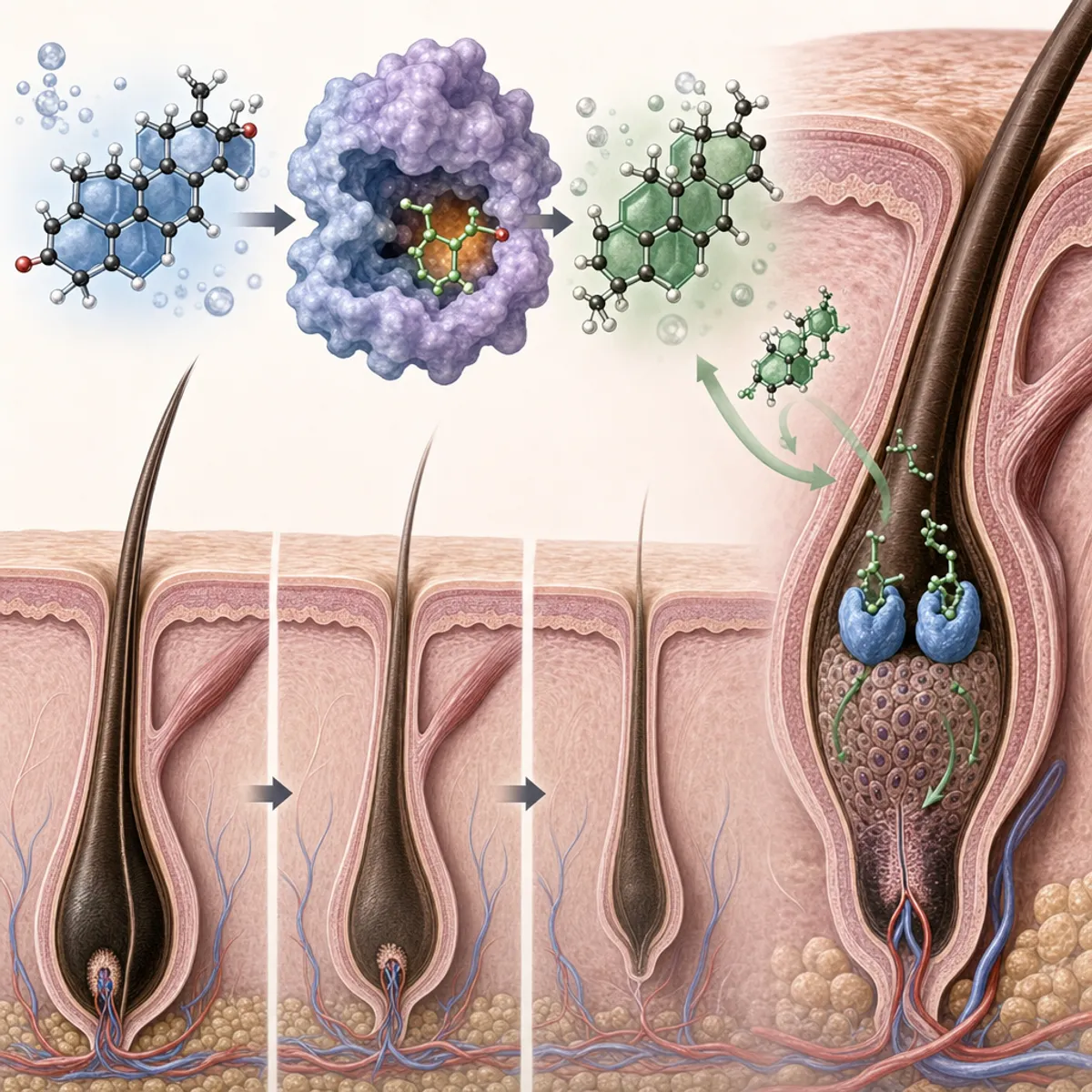
Here's what that mechanism actually requires: high DHT alone won't cause it. You also need follicles genetically sensitive to DHT. The AR gene, which encodes androgen receptors, determines how strongly follicles respond to that binding. Two people can carry identical DHT levels and see completely different outcomes depending on receptor sensitivity.
That gene-dependence is what most creatine-hair loss discussions skip entirely.
Why One Study Became a Widespread Myth
The spread pattern follows a familiar template. A single striking data point gets extracted from context, stripped of its caveats, and circulated as settled science. Bodybuilding forums ran with it. Reddit threads amplified it. The concern landed in YouTube videos and mainstream fitness coverage without anyone pausing to ask what the study actually measured.
The methodological problems were there from the start. Twenty participants is too small a sample for sweeping conclusions about a supplement used by tens of millions. More telling: a systematic review of 12 subsequent studies on creatine and androgens found no consistent evidence of increased DHT from creatine supplementation. None replicated the original signal in any meaningful way.
One unreplicated hormonal observation in a tiny cohort does not prove that creatine causes hair loss. When the follow-up research arrived, the alarm didn't hold.
Creatine Side Effects That Are Actually Supported by Evidence
Water retention is the most common documented side effect. Creatine pulls water into muscle cells, adding roughly 1 to 3 pounds in the first week, none of which is fat, and all of which reverses once you stop.
Gastrointestinal discomfort is real but dose-dependent. Cramping and bloating appear most often during loading phases at 25g daily. At a standard 5g dose, they're far less common, and taking creatine with food or splitting it into two smaller servings throughout the day reduces them further for most people.
How Creatine Works and Why Athletes Use It
Creatine is one of the most studied sports supplements ever developed. Your body produces it naturally from amino acids, with small amounts also coming from meat and fish. Supplementing with creatine monohydrate pushes muscle phosphocreatine stores beyond what diet alone provides.
During high-intensity work like heavy lifts or sprints, muscles burn through ATP almost instantly. Phosphocreatine donates a phosphate group to regenerate ATP in real time, extending output before fatigue sets in.
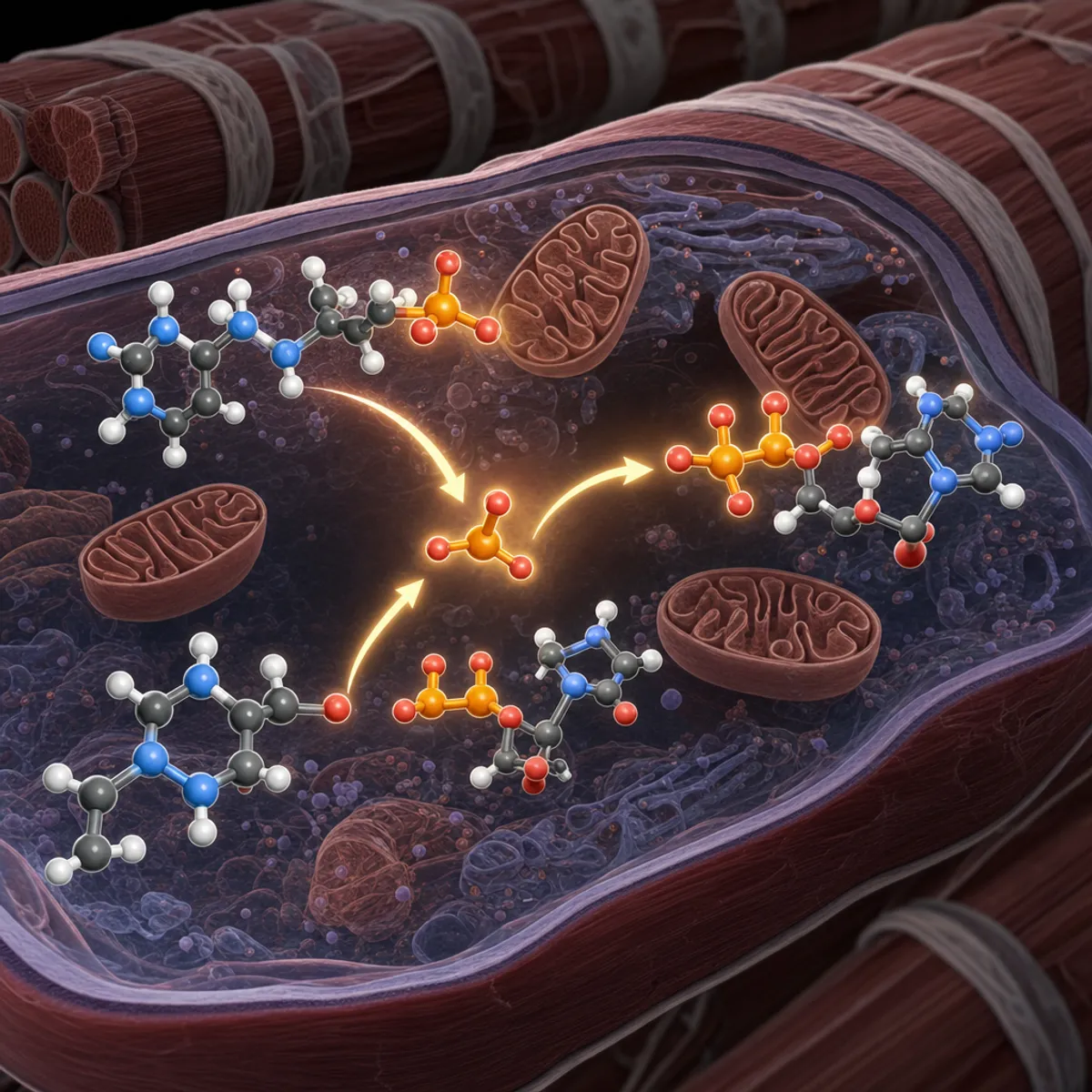
That's the full mechanism. No hormonal pathway involved. No follicle interaction anywhere in the process.
Gender-Specific Considerations for Creatine Use
Women have 70 to 80% lower endogenous creatine stores than men, meaning supplementation delivers a proportionally larger baseline benefit for women instead of a greater risk.
Hormonal fluctuations across the menstrual cycle do affect creatine metabolism, with levels shifting across different phases. Research here is still developing, but nothing in the current literature points to increased hair loss risk for women as a result.
The DHT-based mechanism behind androgenetic alopecia is far less relevant in women, who carry much lower androgen levels and different follicular receptor distributions. Concerns about creatine being unsafe for women around hair loss have no research support.
Genetic Predisposition Matters More Than Supplementation
Androgenetic alopecia risk is written into your biology long before any supplement enters the picture. AR gene variants, inherited through family lines, set follicular sensitivity to androgens decades in advance. Your family history is a far stronger predictor of pattern hair loss than any dietary variable.
Creatine has no documented interaction with AR gene expression. Its mechanism stays confined to phosphocreatine synthesis and ATP regeneration. If your genetics already place you at risk, that driver exists independent of supplementation.
When to Be Cautious With Creatine
Most people tolerate creatine without issue, but certain situations warrant real attention.
Pre-existing kidney disease is the main concern. If renal function is already compromised, creatine clearance changes, and that warrants physician oversight before starting.
Medications that affect renal function, including NSAIDs, some antibiotics, and diuretics, add another variable worth flagging with your doctor.
Staying well hydrated is non-negotiable. Low fluid intake creates unnecessary kidney strain, particularly during a loading phase.
Running a baseline metabolic panel with creatinine levels before you start gives you real data to compare against if anything changes after supplementing.
How BioHackLabsHQ Approaches Supplement Claims
Every supplement claim we publish traces back to the actual study, not a summary of a summary. For the creatine and hair loss question, we reviewed the primary research directly, noted the sample sizes, checked whether findings have been replicated, and reported what the data shows instead of what makes for a cleaner headline. When evidence is limited, we say so plainly. When a single study gets misrepresented across thousands of articles, we correct the record. That's the standard we hold ourselves to across every topic we cover.
Final Thoughts on Creatine and Male Pattern Hair Loss
The entire creatine hair loss debate started with a hormonal measurement in 20 people, not clinical hair outcomes, and no follow-up research replicated that finding. The 2025 trial finally measured what actually matters using advanced follicular imaging across 12 weeks and found no connection. Your genetic predisposition to androgenetic alopecia exists independent of supplementation. If creatine fits your training goals, the research doesn't give you a reason to avoid it over hair concerns.
FAQ
Does creatine monohydrate cause hair loss?
No, creatine monohydrate does not cause hair loss based on the current research. A 2025 randomized controlled trial measured hair density, follicle count, and thickness directly in 38 men taking 5g daily for 12 weeks and found no differences compared to placebo.
Will 5g of creatine cause hair loss if I'm genetically predisposed to balding?
The standard 5g daily dose showed no effect on hair metrics even in a controlled study setting. If you carry AR gene variants that make your follicles sensitive to DHT, your genetic predisposition drives hair loss independent of creatine supplementation.
Does creatine actually cause DHT to increase?
One 2009 study reported a 56% DHT increase during a 7-day loading phase at 25g daily, but a systematic review of 12 subsequent studies found no consistent evidence of increased DHT from creatine. That single finding was never replicated.
How much weight can you gain from creatine in a month?
You can expect 1 to 3 pounds in the first week from water retention as creatine pulls fluid into muscle cells. This is not fat gain, reverses when you stop supplementing, and represents the typical range for most users.
Does creatine cause weight gain in women differently than men?
Women experience the same water retention mechanism as men, typically 1 to 3 pounds in the first week. Women have 70 to 80% lower endogenous creatine stores than men, meaning supplementation delivers a proportionally larger baseline performance benefit instead of different weight gain patterns.
Frequently asked questions
- 01 Does creatine monohydrate cause hair loss?
- No, creatine monohydrate does not cause hair loss based on the current research. A 2025 randomized controlled trial measured hair density, follicle count, and thickness directly in 38 men taking 5g daily for 12 weeks and found no differences compared to placebo.
- 02 Will 5g of creatine cause hair loss if I'm genetically predisposed to balding?
- The standard 5g daily dose showed no effect on hair metrics even in a controlled study setting. If you carry AR gene variants that make your follicles sensitive to DHT, your genetic predisposition drives hair loss independent of creatine supplementation.
- 03 Does creatine actually cause DHT to increase?
- One 2009 study reported a 56% DHT increase during a 7-day loading phase at 25g daily, but a systematic review of 12 subsequent studies found no consistent evidence of elevated DHT from creatine. That single finding was never replicated.
- 04 How much weight can you gain from creatine in a month?
- You can expect 1 to 3 pounds in the first week from water retention as creatine pulls fluid into muscle cells. This is not fat gain, reverses when you stop supplementing, and represents the typical range for most users.
- 05 Does creatine cause weight gain in women differently than men?
- Women experience the same water retention mechanism as men, typically 1 to 3 pounds in the first week. Women have 70–80% lower endogenous creatine stores than men, meaning supplementation delivers a proportionally larger baseline performance benefit rather than different weight gain patterns.
- 06 Creatine monohydrate vs creatine HCL for hair loss — does the form matter?
- No form of creatine has been shown to cause hair loss in clinical research. The 2025 trial used creatine monohydrate, the most studied form, and found zero effect on hair density or DHT levels across 12 weeks.
- 07 Does creatine cause weight gain in your face or just water retention in muscles?
- Creatine pulls water specifically into muscle cells, not subcutaneous tissue or facial areas. The 1 to 3 pounds of water retention occurs intramuscularly and reverses when you stop supplementing.
- 08 How fast does creatine cause hair loss if it actually did?
- No timeline exists because no study has ever documented creatine causing hair loss. The 2025 trial tracked hair metrics for 12 weeks with daily use and found no follicular changes at any point.
- 09 Can I take creatine if I already have male pattern baldness?
- Yes, creatine does not interact with the genetic AR variants that drive androgenetic alopecia. Your existing hair loss pattern progresses based on follicular DHT sensitivity, not creatine supplementation.
- 10 Does creatine cause permanent hair loss or is it reversible?
- Creatine does not cause hair loss at all based on the current evidence. The 2025 RCT measured follicular outcomes directly and found no connection between 5g daily supplementation and any hair metric changes.
- 11 What's the safest creatine dose if I'm worried about side effects?
- 5g daily is the standard evidence-based dose used in the 2025 hair loss trial and thousands of other studies. Start with 5g taken with food to reduce any gastrointestinal discomfort, which is the most common documented side effect.
- 12 Does consuming creatine affect women's hormones or hair differently than men?
- Women carry far lower androgen levels and different follicular receptor distributions, making DHT-related hair loss mechanisms less relevant. Creatine supplementation has no documented hormonal effects specific to women that would increase hair loss risk.
- 13 Should I cycle off creatine to avoid long-term hair loss?
- No evidence supports cycling creatine to prevent hair loss because no evidence links creatine to hair loss in the first place. Continuous daily use at 5g has been studied extensively without follicular safety concerns.
- 14 Does creatine speed up hair loss if you're already thinning?
- No, creatine does not accelerate androgenetic alopecia progression. Hair loss driven by genetic AR sensitivity follows its own timeline independent of creatine supplementation, as shown in the 2025 trial where follicular metrics remained unchanged.
- 15 Can I use creatine during a loading phase without risking hair loss?
- The 2009 study tracked DHT during a 7-day loading phase at 25g daily, but that finding was never replicated and no hair loss was measured. The 2025 trial used 5g daily without a loading phase and found zero hair changes, making standard dosing the safer approach if you have concerns.