Protein Intake Calculator: How Much Protein Do You Need Daily? (May 2026)
Calculate your daily protein needs by body weight and goal. Target 1.6-2.4 g/kg for muscle gain or 1.8-2.2 g/kg for fat loss. Updated May 2026 with research-backed ranges.
If you've used a protein intake calculator for muscle gain or weight loss, you've probably gotten a number that feels either too high or weirdly low. That's because most calculators treat all goals the same, when the research clearly doesn't. Someone in a steep calorie deficit needs more protein per kilogram than someone eating at maintenance, and someone lifting for hypertrophy needs more than both. We walked through the current evidence on goal-adjusted protein ranges and built the formulas you actually need, whether you're trying to preserve muscle while cutting or maximizing lean mass gains.
TLDR:
- Target 1.6 to 2.4 g/kg daily for muscle gain or 1.8 to 2.2 g/kg during fat loss to preserve lean mass
- Distribute protein across 3 to 4 meals at 20 to 40g each for 25% greater muscle protein synthesis
- Track with DEXA scans and bloodwork every 8 to 12 weeks to verify your intake supports lean mass gains
- A 75 kg lifter needs 120 to 165g daily; use body weight in kg × goal-specific g/kg for your target
Understanding Protein Requirements Based on Goals
Protein needs shift based on your goal. The old 0.8 g/kg recommendation, set decades ago, was designed to prevent deficiency in sedentary adults. It was never meant to optimize body composition, recovery, or healthy aging.
Current dietary guidance points to 1.2 to 1.6 grams of protein per kilogram of body weight daily for most active adults, with consistent gains in lean mass retention, satiety, and metabolic markers at this higher intake.
Where you land in that range depends on the goal:
- Maintenance and general health: 1.2 to 1.4 g/kg
- Weight loss while preserving muscle: 1.6 to 2.2 g/kg
- Muscle gain and resistance training: 1.6 to 2.4 g/kg
Any calculator that ignores your goal and only reads scale weight will undershoot what you actually need.
How to Calculate Your Protein Intake by Body Weight
The math is simple. Take your body weight in pounds, divide by 2.2 to convert to kilograms, then multiply by your goal-specific protein target.
Here is the two-step formula:
- Step 1: Body weight (lbs) / 2.2 = body weight (kg)
- Step 2: Body weight (kg) x protein target (g/kg) = daily protein in grams
A worked example for a 150-pound adult: 68 kg x 1.2 g/kg = 82 g for maintenance, 68 kg x 1.8 g/kg = 122 g for fat loss with muscle retention, and 68 kg x 2.2 g/kg = 150 g for muscle gain.
If you track in kilograms, skip the conversion. A 75 kg lifter targeting 2.0 g/kg lands at 150 grams per day. Round to the nearest 5 grams for practical meal planning.
Protein Requirements for Muscle Gain
For muscle gain, research consensus lands between 1.6 and 2.2 g/kg of body weight daily. Going above 2.2 g/kg shows diminishing returns, with excess protein oxidized instead of partitioned toward muscle protein synthesis.
A 75 kg man targeting hypertrophy needs roughly 120 to 165 grams daily. A 60 kg woman lifting for muscle gain falls between 96 and 132 grams.
But protein is the substrate, not the stimulus. Without progressive resistance training, even perfect intake produces minimal hypertrophy because protein supplies the substrate but lifting creates the stimulus. The pairing drives results:
- Mechanical tension from lifting signals muscle protein synthesis
- Adequate protein supplies amino acids to rebuild stronger tissue
- Caloric intake at maintenance or slight surplus supports the process
Skip the training, and you're feeding a building site with no construction crew.
Protein Requirements for Weight Loss
During a calorie deficit, protein does double duty: it preserves lean tissue your body would otherwise break down for fuel, and it blunts hunger by raising GLP-1 and PYY while suppressing ghrelin.
The 1.2 to 1.6 g/kg range works for sedentary adults losing weight, but anyone in a steeper deficit or training while cutting should push toward 1.8 to 2.2 g/kg. The deeper the deficit, the higher the protein floor.
For women in a fat-loss phase, a 55 kg woman needs 88 to 110 grams daily, a 65 kg woman needs 104 to 130 grams, and a 75 kg woman needs 120 to 150 grams depending on deficit depth.
Front-load protein at breakfast. It curbs afternoon cravings better than carb-heavy starts and protects against the muscle catabolism that quietly tanks resting metabolic rate during prolonged dieting.
Protein Distribution Throughout the Day
When you eat protein matters almost as much as how much. Research on 24-hour muscle protein synthesis shows roughly 25% greater MPS when protein is distributed evenly versus skewed toward dinner.
Each feeding triggers a discrete MPS response that peaks around 90 minutes and tapers within three hours. One 100-gram protein bomb at night cannot replicate the cumulative effect of three or four well-timed doses because each meal triggers a fresh anabolic window.
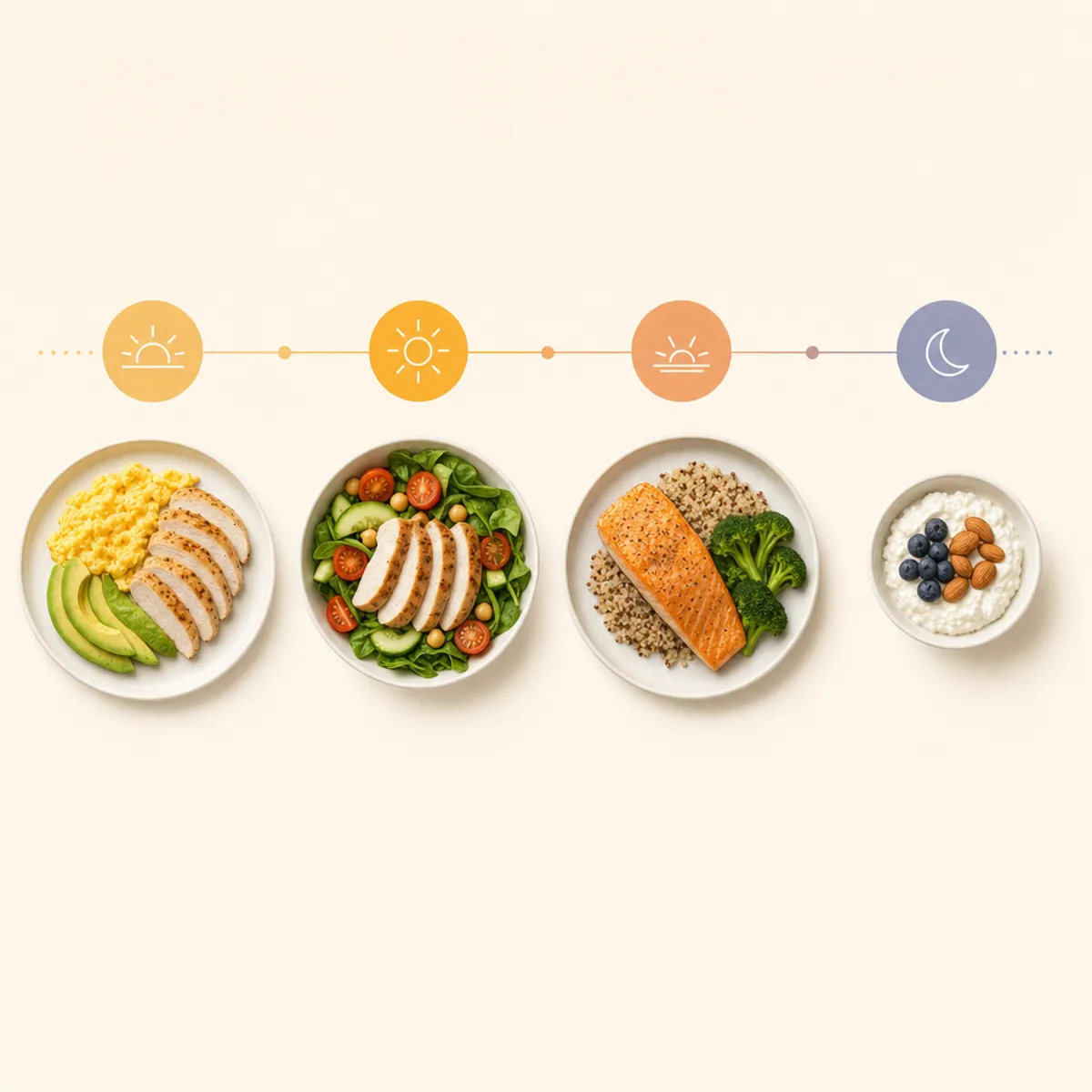
Aim for 20 to 40 grams per meal, spaced across three to four eating windows:
- Breakfast: 30 g (eggs, Greek yogurt, cottage cheese)
- Lunch: 35 g (chicken, fish, tofu)
- Dinner: 35 g (lean beef, salmon, lentils)
- Optional snack or post-workout: 20 to 25 g
Smaller frames sit at the lower end; larger lifters at the upper end.
High Protein Food Sources by Category
Hitting 120 to 150 grams daily is straightforward when you know what a 25-gram serving actually looks like. Whole foods should anchor most of your intake, with powders filling gaps when schedules get tight.
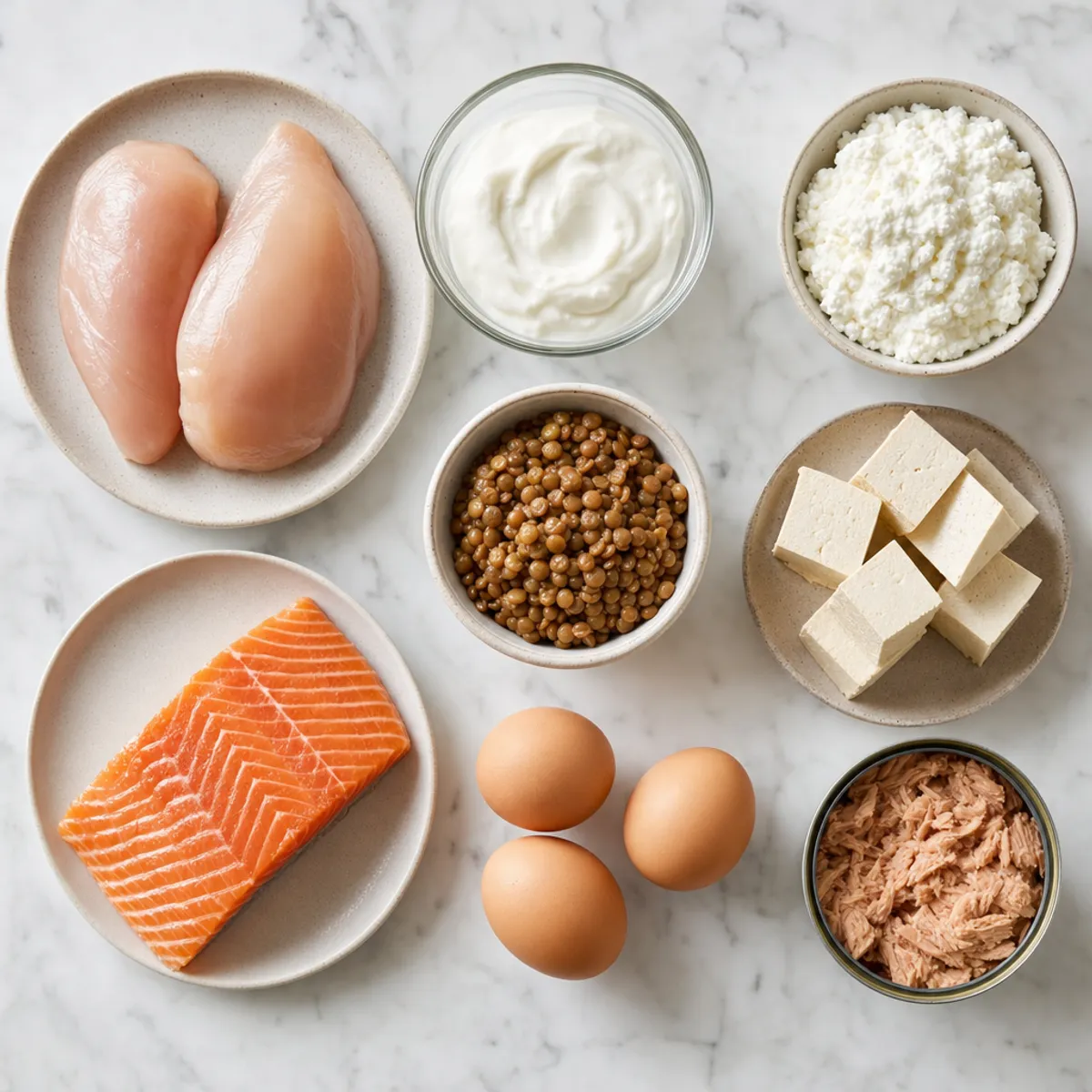
| Category | Food | Serving | Protein |
|---|---|---|---|
| Animal | Chicken breast | 4 oz cooked | 35 g |
| Animal | Lean ground beef (93%) | 4 oz cooked | 27 g |
| Seafood | Salmon | 4 oz cooked | 25 g |
| Seafood | Canned tuna | 1 can (5 oz) | 30 g |
| Dairy | Greek yogurt (nonfat) | 1 cup | 23 g |
| Dairy | Cottage cheese (low-fat) | 1 cup | 28 g |
| Plant | Tofu (firm) | 4 oz | 20 g |
| Plant | Lentils (cooked) | 1 cup | 18 g |
| Plant | Tempeh | 4 oz | 22 g |
| Supplement | Whey isolate | 1 scoop | 25 g |
Plant eaters should combine sources across meals to cover the full amino acid profile. Leucine drives the MPS response, and animal proteins deliver it more densely per gram.
Common Protein Calculator Mistakes and How to Avoid Them
Most people miss their protein target by 20 to 30 grams a day and never notice. The errors are predictable, and each one undercuts the math you just ran.
Watch for these traps:
- Using goal weight instead of current weight inflates your target and sets you up to fall short daily
- Ignoring activity level keeps a five-day-a-week lifter stuck at sedentary numbers
- Eyeballing portions: a "6 oz" chicken breast is usually closer to 4 oz cooked, costing you 8 to 10 grams
- Counting total food weight instead of protein content, treating a cup of yogurt like a cup of pure protein
- Skipping verification after week one, when intake quietly drifts back to baseline
Track everything for two weeks with a food scale and a logging app. A “6 oz” chicken breast is usually closer to 4 oz cooked, costing you 8 to 10 grams. Estimates lie. Numbers do not.
Protein Intake Tracking and Biomarkers
Hitting your protein number is a means, not an end. The point is changing what shows up on objective measures over 8 to 12 weeks.
Set a baseline before adjusting intake, then retest at the same interval:
- DEXA scan or InBody for lean mass, fat mass, and visceral adipose tissue
- Strength benchmarks across two or three compound lifts (squat, deadlift, press)
- Bloodwork: serum albumin, BUN, creatinine, and a full metabolic panel to flag kidney load
- Tape measurements at chest, waist, hips, and mid-thigh as a low-cost proxy
If lean mass climbs, strength trends up, and renal markers stay in range, your target is working. If lean mass stalls despite training and adequate intake, the number is likely too low or distribution across meals is off. Let the data, not the calculator alone, drive the next adjustment.
Final Thoughts on Goal-Specific Protein Targets
The right protein calculator for muscle gain or fat loss accounts for training status, deficit depth, and current body weight. Generic recommendations were built for sedentary adults and will leave you short if you're lifting or cutting. Calculate your target, spread intake evenly across meals, and watch lean mass and strength markers over 8 to 12 weeks. Adjust based on what the measurements show, not what feels right.
FAQ
Best protein intake calculator for weight loss vs muscle gain?
For weight loss, target 1.6 to 2.2 g/kg to preserve muscle during a deficit. For muscle gain, target 1.6 to 2.2 g/kg paired with progressive resistance training and caloric surplus. The range overlaps, but the difference is training stimulus and total calorie intake, not protein alone.
How much protein does a 75 kg man need to build muscle?
A 75 kg man needs 120 to 165 grams of protein daily for muscle gain (1.6 to 2.2 g/kg). Without progressive resistance training, even perfect intake produces minimal hypertrophy because protein supplies the substrate but lifting creates the stimulus.
Can I hit my protein target without tracking every meal?
No. Studies show most people miss their target by 20 to 30 grams daily when eyeballing portions. Track with a food scale and logging app for two weeks minimum. A "6 oz" chicken breast is usually 4 oz cooked, costing you 8 to 10 grams per meal.
What's the difference between a free protein calculator and measuring actual outcomes?
A calculator gives you a starting number, but biomarkers tell you if it's working. Retest DEXA scans, strength benchmarks, and bloodwork (albumin, BUN, creatinine) every 8 to 12 weeks. If lean mass stalls despite training and adequate intake, the number is too low or meal distribution is off.
When should I spread protein across meals instead of one large serving?
Always. Research shows 25% greater muscle protein synthesis when protein is distributed evenly versus skewed toward one meal. Each feeding triggers a discrete MPS response that peaks at 90 minutes and tapers within three hours. One 100-gram serving at night cannot replicate three to four well-timed doses of 20 to 40 grams because each meal triggers a fresh anabolic window.
Frequently asked questions
- 01 What can wearables do ?
- It can track longevity metrics